
Why Is the Air in My Home So Dry? 5 Real Causes
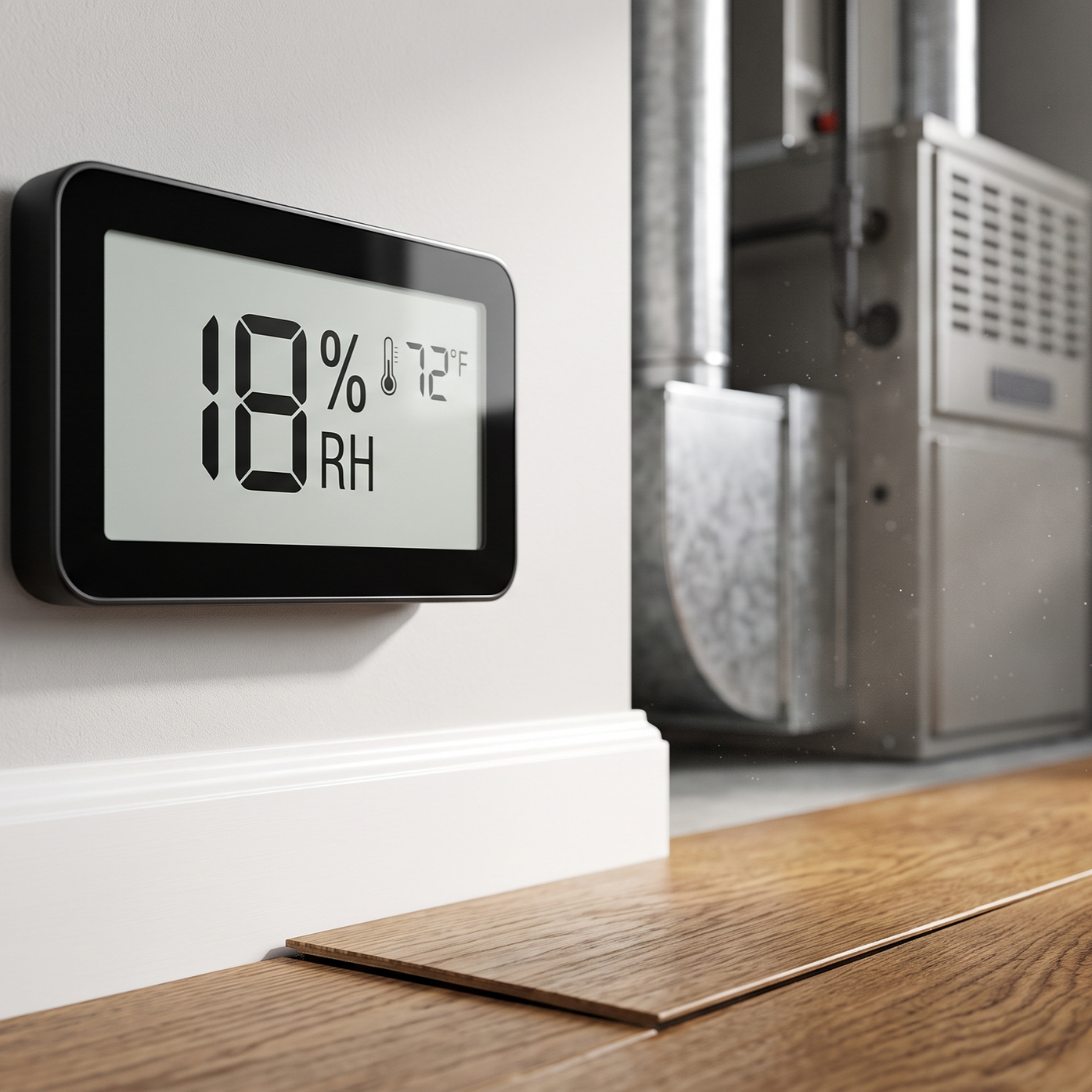
You wake up with a scratchy throat, reach for the doorknob, and get zapped. The hardwood floor has opened a hairline gap that it did not have in the spring. Your skin feels tight no matter how much lotion you use. All of these point to the same thing: the air inside your home is holding very little moisture, and it is affecting both your comfort and your house.
Dry indoor air is not a single problem with a single fix. It is the sum of what your climate does, what your heating does, and how tightly your house is sealed. Understanding which of those is driving your dryness tells you whether a humidifier, some weatherstripping, or a change in how you run your system will actually help.
What "Dry Air" Actually Means
The amount of water vapor in the air is described as relative humidity, a percentage that compares how much moisture the air is holding against the most it could hold at that temperature. A comfortable indoor range sits roughly between 30 and 50 percent. Below about 30 percent, you cross into the territory where skin dries out, static builds, and wood begins to shrink.
Here is the part that trips people up: relative humidity depends on temperature, not just on how much water is floating around. Think of air like a sponge that grows larger as it warms. Warm a given batch of air, and the sponge gets bigger, so the same amount of water fills a smaller share of it, and the humidity reading drops even though not a single drop of moisture has left the room. Cool that air back down, and the sponge shrinks, and the reading climbs again. That relationship is the key to almost every cause below.
The Climate Baseline: Living in a Dry Country
Some homes are dry because the outdoors is dry. In an arid climate, the outside air carries very little moisture for much of the year. Every time that air trades places with the air inside your home, through doors, vents, and small gaps, it pulls your indoor humidity toward the low outdoor level. This is the baseline you start from, and it runs year-round rather than in one season.
That year-round baseline is why dry-air complaints do not disappear when the furnace shuts off in spring. The heat makes winter worse, but a dry climate keeps the indoor air on the low side even through the warm months, when hot outdoor air can still be thirsty for moisture. Two forces, two seasons, same result: a home that stays drier than the comfort band without help.
Cause One: Running the Heat
When cold weather arrives, and the furnace runs, it pulls in cool air and warms it. Going back to the sponge, that warming enlarges the sponge without adding any water, so the relative humidity of the heated air falls. A furnace heats air; it does not add moisture to it. So the harder your system works to keep the house warm on a cold day, the lower the indoor humidity tends to sink.
This is why a house can feel parched in the depths of heating season even if it felt fine a month earlier. Nothing pulled the water out dramatically. The air was simply warmed; its capacity grew, and the moisture present now fills a smaller fraction of it.
Cause Two: Air Leakage and Infiltration
A house is never perfectly sealed. Gaps around windows and exterior doors, gaps where pipes and wires pass through walls, and openings into the attic all let outside air trickle in and inside air trickle out. When the outdoor air is dry, every bit of it that infiltrates replaces more humid indoor air with drier air. The leakier the house, the faster your conditioned, moisture-holding air escapes and gets swapped for the parched stuff outside.
This is also why sealing leaks can matter as much as any appliance. If your indoor air keeps leaking out and dry air keeps seeping in, you are fighting a constant drain, and a humidifier ends up working overtime to replace the moisture that is walking out through the cracks.
Cause Three: Over-Ventilation
Ventilation is good, up to a point. Bath fans, kitchen range hoods, and whole-house fans deliberately push indoor air out and draw fresh air in. Run them too long or too often in a dry climate, and they do the same thing a leaky house does, only on purpose: they dump your humid indoor air outside and replace it with dry outdoor air. Ventilation you need for odors and moisture control can quietly tip into a source of dryness if it runs well past the job.
Cause Four: An Oversized or Short-Cycling System
A system that is too large for the space heats or cools the house in quick, powerful bursts, then shuts off, a pattern called short-cycling. Those short bursts move a lot of air fast. In heating, rapid bursts of warm air can quickly lower relative humidity, and the frequent on-off cycles make the indoor climate harder to keep steady. Sizing and cycling behavior are worth checking when a home feels dry despite reasonable habits, because the fix there is mechanical rather than something a humidifier alone resolves.
Why Dry Air Is Worth Fixing
The discomfort is the obvious part: tight, itchy skin, chapped lips, a raw throat in the morning, and the static shocks that make you flinch at every light switch. For anyone whose breathing is already sensitive, very dry air tends to make the nose and throat feel worse rather than better.
The quieter damage is to the house itself. Wood is hygroscopic, meaning it gives up moisture to dry air and takes it back from humid air, causing it to shrink and swell as it goes. Hold a home too dry for too long, and hardwood floors develop gaps, trim pulls at its joints, furniture loosens, and wooden instruments can crack. The house is telling you the same thing your skin is.
How to Bring the Moisture Back
The most direct fix is a whole-house humidifier installed on your HVAC system, which adds controlled moisture to the air as it circulates. There are a few types. A bypass humidifier routes some air past a wet pad, so it picks up moisture. A fan-powered model does the same, using a built-in fan for higher output. A steam humidifier boils water and delivers vapor directly, providing the most controlled output in the driest conditions. The right choice depends on your system and how dry your home actually gets, which is why these are installed and matched by a professional rather than guessed at.
Whatever the equipment, it should be governed by a humidistat, a control that measures indoor humidity and adds moisture only until it reaches a target you set within the comfort band. That target matters because more is not better here. Push the humidity too high, and water starts condensing on cold window glass and inside wall cavities, which invites mold. The goal is to land inside the band and stay there, not to run a humidifier flat out.
Alongside the equipment, the building itself does a lot of the work. Sealing air leaks around windows, doors, and attic penetrations slows the constant swap of humid indoor air for dry outdoor air, so the moisture you add actually stays put. Running ventilation only as long as a task needs keeps you from venting away comfort. And small everyday moisture sources help at the margins: houseplants release water as they transpire, drying laundry indoors adds a little, and leaving the bathroom door open after a shower lets that moisture spread rather than vent straight out.
Because the humidifier, the humidistat, and the ductwork all tie into your heating and cooling system, the installation and setup are a job for a qualified technician. A well-matched system, set to hold the air in the 30 to 50 percent range, keeps you comfortable through cold-weather heating and through the dry stretch of a hot summer alike, without tipping over into the moisture problems that come from overdoing it.
Frequently Asked Questions
Aim for roughly 30 to 50 percent relative humidity; that is the comfort band for most homes. A cheap hygrometer, the small meter that reads humidity, lets you see exactly where your air sits, so you are not guessing. It is worth watching the low end in particular, because once the reading drops below about 30 percent, static shocks, dry skin, and wood cracking tend to show up.
A concrete example makes it clear. Take outdoor air at 30 degrees carrying 60 percent humidity, then heat it to 70 degrees indoors: its relative humidity falls to roughly 15 percent, even though not a single drop of moisture was removed. The furnace only raised the temperature, which enlarged the air's capacity, so the same water now fills a much smaller share of it. That is why a house can feel parched during a cold snap, when the heat runs hard, and nothing is actively drying the air out.
The answer scales with how dry it gets and how large the home is. Bypass units add a modest amount of moisture and suit smaller homes. Fan-powered units add more, using a built-in fan to push air across the wet pad. Steam units put out the most and are rated in gallons per day, which is why they are matched to the driest conditions and the largest spaces. So the pick tracks output against demand: the drier and bigger the home, the further up that scale you need to go.
Yes, and the mechanism is the stack effect, which makes it worse in two-story homes. Warm indoor air rises and escapes through gaps up high, near the ceiling and attic, while dry outdoor air gets pulled in through gaps down low to replace it. That constant vertical swap steadily lowers indoor humidity. A blower-door test pinpoints exactly where those leaks are, so sealing effort goes to the openings that matter rather than being spread at random.
Yes, and the fix is to lower the humidistat setting as it gets colder outside. Cold glass condenses moisture sooner, so a level that is perfectly fine at 40 degrees outdoors will fog the windows at 10 degrees. Following the outdoor temperature down keeps the moisture you add from collecting on cold surfaces, where it invites mold inside wall cavities and along window frames. The comfortable target is a moving one, not a single number you set once and forget.
Yes, though how much is recovered depends on the part. Wood floors and trim reabsorb moisture and mostly return to normal once humidity climbs back into range, so their gaps often close on their own. Other damage is permanent: cracked joints, split panels, and a warped instrument soundboard do not heal when the moisture comes back. That difference is why holding the air within range steadily matters more than correcting it after the fact, since some of the harm cannot be undone once it happens.
Schedule a whole-house humidifier assessment — get your indoor air balanced into a comfortable, wood-safe range. Hi-Tech Heating and Cooling serves Albuquerque, Rio Rancho, Corrales, and the surrounding area. Call (505) 398-4398 for a consultation.
