
8 Furnace Failing Signs You Should Never Ignore
Quick Answer: A furnace usually warns you before it quits: short-cycling, weak or uneven heat, climbing gas bills, a yellow or flickering burner flame instead of steady blue, new banging or screeching noises, repeated ignitor failures, soot or extra dust, and an age past 15 to 20 years. A yellow flame or a cracked heat exchanger also raises the risk of carbon monoxide, so install CO detectors and treat any alarm as an emergency.
Your furnace rarely dies in a single dramatic moment. It slides toward failure over weeks or seasons, dropping hints along the way. Catching those hints early is the difference between a planned repair and a cold house with no heat and a surprise bill. Because the symptoms only appear while the unit is running, an annual checkup, scheduled whenever the furnace has been sitting idle for a stretch, is the smart time to look for them, when a technician can force the furnace through a full cycle and watch what it does.
Below are the warning signs that matter, what each one is actually telling you about the machinery inside, and how to think about repair versus replacement.
Why a Failing Furnace Shows These Signs
Most furnace problems trace back to a handful of components working harder than they should or wearing past their tolerance. Understanding the mechanism behind each symptom helps you judge how urgent it is.
Short-cycling: the furnace starts and stops too fast: A healthy gas furnace runs long enough to satisfy the thermostat, then rests. When it fires up, runs a minute or two, shuts off, and repeats, something is telling it to stop early. The most common cause is a clogged filter choking airflow, which lets heat build up around the burners until the high-limit switch trips for safety. A failing limit switch, a blocked flue, or an oversized furnace can do the same thing. Every start puts the most stress on the ignition system, so a short-cycling furnace ages itself quickly.
Weak, uneven, or no heat at all: If some rooms stay cold or the air from the vents feels lukewarm, the issue is usually either combustion or airflow. On the combustion side, a dirty flame sensor is a frequent culprit: this thin metal rod confirms the burner actually lit, and when it gets coated, it can no longer read the flame, so the control board shuts the gas off as a precaution. On the airflow side, a tiring blower motor or a slipping belt moves less air across the heat exchanger, so less warmth reaches the rooms.
Rising heat bills with no change in habits: As parts wear, the furnace loses efficiency. A partly clogged burner, a weak blower, or a heat exchanger caked with combustion residue all force the unit to run longer to hit the same temperature. Longer run times mean more gas and more electricity for the same comfort.
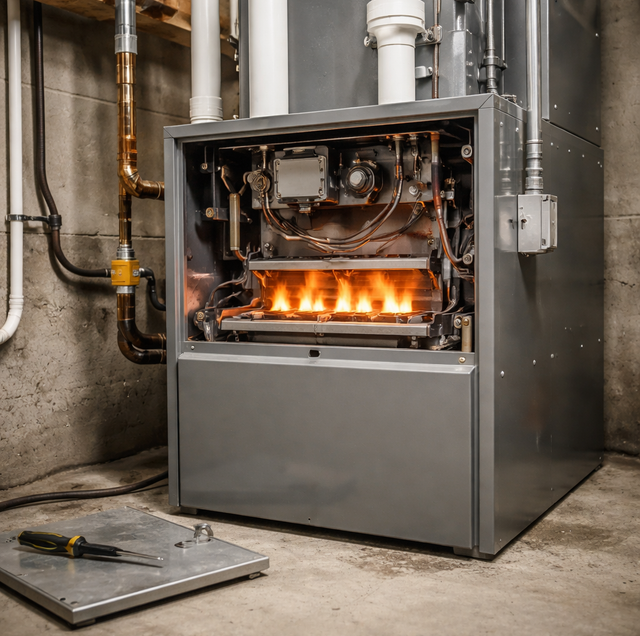
Flame color: steady blue versus yellow or flickering: A properly tuned gas burner produces a crisp, steady blue flame, which signals clean and complete combustion. A yellow, orange, or lazy flickering flame means the fuel is not burning fully, often from a dirty burner or poor air supply. Incomplete combustion is the condition that produces carbon monoxide, which makes flame color one of the most important things to watch.
New noises: Banging or a small boom at startup can mean delayed ignition, where gas pools for a second before lighting. Rattling often points to loose panels or ductwork. A high-pitched screech usually means a blower motor bearing or belt is failing. A persistent scraping sound can be a blower wheel hitting its housing. None of these are normal, and each names a different worn part.
Repeated ignitor failures: Modern furnaces use a hot-surface ignitor, a brittle silicon-carbide element that glows to light the gas. It naturally wears out, but if a replacement fails again within a season, the real problem is often elsewhere: a voltage issue, a cracked element from repeated thermal shock, or short-cycling that overworks it.
Soot or a jump in household dust: Black soot near the furnace or around vents is a sign of incomplete combustion and needs a technician promptly. A general increase in dust often traces to a filter that is bypassed or overdue, or to cracks letting unfiltered air move through the system.
Age past its service life: A well-maintained gas furnace typically lasts 15 to 20 years. Past that window, parts become harder to source and the heat exchanger, the one component you cannot safely ignore, has been through enough heating and cooling cycles that metal fatigue becomes a real concern.
The Carbon Monoxide Danger You Cannot See
Of every sign on this list, one carries a safety stake far beyond comfort: a cracked heat exchanger.
The heat exchanger is the sealed metal chamber that separates the toxic combustion gases from the clean air your blower pushes into your rooms. Over years of expanding when hot and contracting when cool, the metal can fatigue and crack, much the way a paperclip snaps after you bend it back and forth enough times. Once a crack forms, combustion byproducts, including carbon monoxide, can seep into the air stream your family breathes.
Carbon monoxide is colorless and odorless, and early symptoms of exposure- headache, dizziness, nausea, and fatigue- are easy to mistake for the flu. That is exactly why you cannot rely on your senses.
Carbon monoxide is colorless and odorless, and a cracked heat exchanger can let it seep into the air your family breathes. Put a CO detector on every level of your home and near sleeping areas. If a CO alarm sounds, or if you smell gas, do not investigate and do not wait; get everyone outside to fresh air, then call the gas utility or 911 from outside.
Protect your household with a few non-negotiable steps:
Install and Maintain CO Detectors: Put a carbon monoxide detector on every level of your home and near sleeping areas. Test the batteries on a schedule and replace the units according to the manufacturer's stated lifespan.
Treat Any CO Alarm as an Emergency: If a CO alarm sounds, or if you smell gas, do not investigate and do not wait. Get everyone outside to fresh air, then call the gas utility or 911 from outside, and have a licensed pro inspect the system before you run it again.
Gas and combustion components are licensed-professional territory. A homeowner can safely swap the air filter and check the thermostat, but diagnosing burners, the heat exchanger, or the gas valve is not a job to attempt yourself.
Repair or Replace: How to Decide
Not every warning sign means it is time for a new furnace. Many are ordinary repairs: a fresh filter, a cleaned flame sensor, a new ignitor, that restore years of service. A few basics help frame the decision.
Lean toward repair when the furnace is comfortably within its service life, the fix is a single wearing part, and the unit has an otherwise clean history. A ten-year-old furnace that needs an ignitor is a repair, not a replacement.
Lean toward replacement when the furnace is near or past the 15-to-20-year mark, when a cracked heat exchanger is confirmed, or when repairs are stacking up year after year. A confirmed heat exchanger crack in particular often tips an older unit into replacement, both for safety and because the part sits at the heart of the machine.
Weigh efficiency too: An aging furnace that runs constantly costs more to operate every month, so a portion of a new unit's cost comes back in lower running costs over its life.
The most reliable path is a professional diagnosis. A technician can pressure-test the heat exchanger, measure combustion, and tell you honestly if you are looking at a single part or a full replacement. Pairing that with an annual checkup catches most of these signs while they are still cheap to fix.
Frequently Asked Questions
Change the air filter first, since a clogged filter is the most common trigger and the one fix a homeowner can safely do. If new short-cycling continues after a fresh filter, book service within a few days rather than letting it run. Repeated rapid starts wear the ignitor and can indicate a failing limit switch or a blocked flue, and a blocked flue can back combustion gases into the home.
Not reliably by eye. Technicians confirm a crack with tools you likely do not have at home: a combustion analyzer that measures carbon monoxide in the flue, and often a borescope camera or a pressurized test to find the breach. Some cracks are hairline and only open up once the metal heats and expands, so they can hide during a cold, static inspection.
Most gas furnaces are engineered for a "temperature rise" of roughly 40 to 70 degrees Fahrenheit between the return air and the supply air, and the exact target is printed on the unit's data plate. A rise below that range often points to too much airflow or a weak flame, while a rise above it usually signals restricted airflow from a dirty filter or blocked ducts, which can trip the limit switch.
Yes. An annual professional tune-up cleans the burners and flame sensor, checks the ignitor and gas pressure, and inspects the heat exchanger for early cracks before they become dangerous. Many manufacturers also require proof of annual maintenance to keep the parts warranty valid, so skipping it can quietly void coverage you already paid for.
A faint burning-dust smell the first time you run heat after a long idle stretch is normal, as dust that settled on the heat exchanger and burners cooks off, and it should fade within an hour. A smell that lingers for days, or a sharp electrical or chemical odor, is not normal and warrants a shutdown and a service call.
Yes, that is by design. The blower runs on a timed "off-delay" of roughly 60 to 180 seconds after the burners cut out, so it can pull the remaining heat off the heat exchanger and deliver it to your rooms instead of wasting it. A blower that never shuts off, though, can mean the fan setting is stuck on, or a limit switch is holding it, which is worth having checked.
Book an annual furnace checkup — catch small problems before they leave you without heat. Hi-Tech Heating and Cooling serves Albuquerque, Rio Rancho, and Corrales. Call (505) 398-4398.
