
Two-Stage vs. Single-Stage HVAC: Which Comfort Wins?
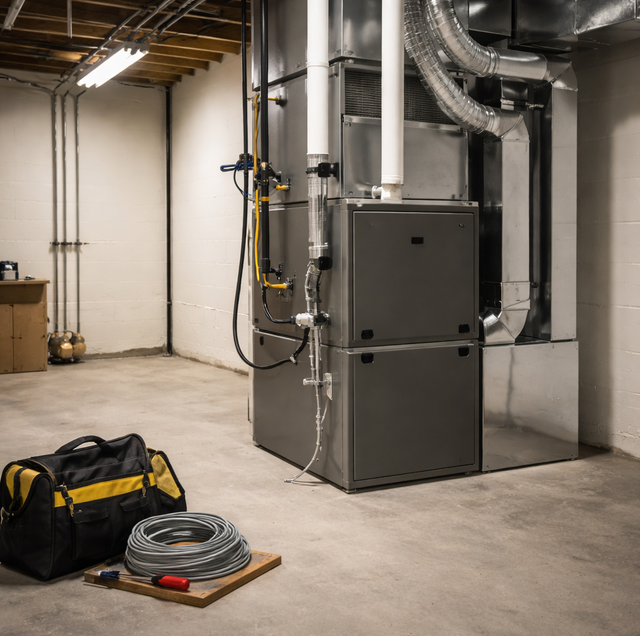
Quick Answer: A single-stage air conditioner or furnace runs at one output, full power or off. A two-stage unit adds a lower setting, so it can run longer at reduced capacity for steadier temperatures, better humidity removal, and quieter operation, ramping to full power only on the hottest or coldest days.
You set the thermostat and the house never quite settles. One room feels cold while another stays warm, the air turns clammy, and the system roars to life, then falls silent, over and over. A lot of that behavior traces back to a single design choice most homeowners never hear about at the point of sale: how many output levels the equipment has. That choice separates single-stage systems from two-stage and variable-speed systems, and it shapes daily comfort more than the brand badge on the cabinet.
What "Stage" Actually Means
A stage is a level of output the equipment can produce. Picture a stove burner that only has an "off" and a "maximum" position versus one with a low and a high flame. The number of stages tells you how many capacity levels the compressor (in an air conditioner or heat pump) or the gas valve and burner (in a furnace) can operate at.
Single-stage equipment has one level. When the thermostat calls, the unit fires at 100 percent. When the room hits the setpoint, it shuts off completely. There is no in-between.
Two-stage equipment has a low setting and a high setting. Most of the year it runs on low, roughly 60 to 70 percent of full capacity, and only steps up to high when the low stage cannot keep pace on an extreme day.
Variable-speed equipment sits above both. Instead of two fixed levels, it modulates across a wide range, sometimes from around 25 percent up to 100 percent in fine increments, matching output almost exactly to the load in the room at any moment.
Those three tiers apply to both cooling and heating. A furnace can be single-stage, two-stage, or modulating, and an air conditioner or heat pump can be single-stage, two-stage, or variable-speed. The comfort logic is the same in summer and winter: a system that can run gently for longer holds conditions steadier than one that only knows full blast.
How a Single-Stage System Behaves
Because it only runs at full output, a single-stage system cools or heats a space quickly, then hits the setpoint and stops. That produces a familiar pattern: a strong blast of cold or hot air, a fast climb to temperature, then a shutdown, followed by drift until the thermostat calls again. Those on-off events are cycles, and single-stage equipment tends to cycle hard and often.
Three side effects come with that rhythm. First, temperature swings. Rooms near the thermostat get satisfied fast while distant rooms lag, so the house rides a wave of slightly too warm to slightly too cool. Second, weaker moisture control in cooling mode. An air conditioner pulls humidity out of the air only while it runs, and short bursts do not give the coil enough time to wring out much water, so the air can feel clammy even when the thermometer reads fine. Third, noise. Every start ramps the blower and compressor from silent to full speed, and you hear that surge each cycle.
None of this makes a single-stage system a poor machine. Sized and installed correctly, it heats and cools reliably and has fewer parts to go wrong. It simply trades finesse for simplicity.
How a Two-Stage System Behaves
A two-stage system spends most of its life on the low setting. Running at partial capacity, it takes longer to satisfy the thermostat, which sounds like a drawback but is the whole point. Longer, gentler run times keep air moving continuously, so warm and cool spots even out across rooms instead of forming between short cycles.
That extended runtime pays off in three ways that mirror the single-stage weaknesses. Temperatures hold steadier because the system is nearly always trickling conditioned air rather than swinging between blast and off. Humidity control improves in cooling mode because the coil stays cold and active far longer, giving it time to condense and drain more moisture from the air. And the equipment runs quieter, since low stage moves less air at lower blower and compressor speeds, avoiding the full-throttle surge of every single-stage start.
Efficiency tends to improve as well. Starting a compressor draws a spike of energy, and a unit that starts less often and coasts on low avoids some of that repeated surge, doing more of its work in its efficient sweet spot. On the hottest afternoon or the coldest morning, the system senses that the low stage is losing ground and steps up to high to catch up, then settles back down. You get full power when you truly need it and quiet, economical operation the rest of the time.
Where Variable-Speed Fits
Variable-speed equipment takes the two-stage idea further. Rather than choosing between two fixed levels, it constantly adjusts output to match the exact load, often paired with a variable-speed blower that fine-tunes airflow to match. The result is the steadiest temperatures, the strongest humidity control, and the quietest operation of the three, because the system rarely shuts off and rarely surges. It generally carries the highest upfront cost and the most sophisticated electronics.
Think of the progression as a dimmer switch versus a two-way switch versus a plain on-off switch. Single-stage is on or off, two-stage adds a middle setting, and variable-speed slides smoothly across the whole range. Each step up buys more comfort refinement and, usually, more upfront investment and more complex parts.
The Tradeoffs, Weighed Honestly
Two-stage equipment costs more upfront than single-stage, and it carries more complex parts: a compressor or gas valve capable of two output levels, plus the controls and often a compatible variable-speed or multi-speed blower to manage them. More parts and more electronics mean a higher purchase price and, potentially, more components that could eventually need service.
Against that, you get the comfort and efficiency gains described above: steadier temperatures, better humidity removal, quieter cycles, and often lower running cost from more time in the efficient low stage. Whether that trade is worth it depends less on the technology and more on how long you plan to own the home and how much the comfort differences matter to you day to day.
When single-stage makes sense: A single-stage system is a sound choice for a tighter budget, a smaller or simpler home, a property you do not plan to keep long, or a household that is not especially sensitive to minor temperature and humidity swings. Fewer parts and a lower purchase price are real advantages.
When two-stage makes sense: Two-stage earns its premium when comfort consistency matters, when clammy or uneven air is a recurring complaint, or when you expect to own the home long enough for efficiency and comfort gains to matter over many seasons. Larger or multi-story homes, which are prone to room-to-room swings, tend to benefit most from the longer, gentler run times.
Sizing and Installation Matter as Much as Stage Count
The single most common way a two-stage upgrade disappoints is poor sizing. If the equipment is too large for the space, it satisfies the thermostat so fast that it rarely leaves low stage long enough to deliver even temperatures or pull moisture from the air. An oversized two-stage unit short-cycles just like an oversized single-stage one and loses the very benefits you paid for. Correct capacity comes from a proper load calculation, not a rule of thumb or a match to the old unit's number.
The most common way a two-stage upgrade disappoints is poor sizing. An oversized unit satisfies the thermostat so fast that it short-cycles and loses the benefits, so correct capacity comes from a proper load calculation, not a rule of thumb or a match to the old unit's number.
Getting the full benefit also depends on matched components and controls. Two-stage and variable-speed systems need a compatible thermostat that can call for the second stage, and the indoor and outdoor equipment should be paired as a matched set so the low and high stages behave as designed. Sizing, refrigerant handling, and installation are licensed HVAC work, and an EPA-certified technician must do anything involving refrigerant. On the maintenance side, changing the air filter on schedule is a safe homeowner task that protects airflow on any system, while deeper service, from checking refrigerant charge to inspecting the staged controls, belongs to a qualified technician.
Frequently Asked Questions
Usually not to full effect. A basic single-stage thermostat has no way to call for the second stage, so a two-stage unit wired to it may only ever run on high, erasing the comfort advantage. Two-stage equipment needs a thermostat with a second-stage terminal (often labeled W2 for heating or Y2 for cooling) or a compatible communicating control. Confirm thermostat compatibility before selecting equipment, not after.
Check the model number and specification label on the outdoor condenser or the furnace cabinet, then look it up in the manufacturer's literature, which lists stage count. A quick behavioral clue also helps: a system that noticeably runs long and quiet on mild days, then gets louder only in extreme weather, is often two-stage, while one that blasts hard and shuts off repeatedly is typically single-stage. The label is the reliable answer.
Not directly. Two-stage heating steadies temperature and reduces the blast-then-off swing, but it does not add moisture to the air. Winter dryness is better addressed with a whole-home humidifier tied into the ductwork. What two-stage does help is comfort at a lower thermostat setting, since gentle continuous airflow feels more even than intermittent hot blasts.
They have more components than single-stage equipment, including staged compressors or gas valves and the controls that manage them, so more parts could eventually need attention. In practice, reliability depends heavily on correct installation and routine maintenance. A well-installed, well-maintained two-stage system is not fragile, but any repair involving the staged controls or refrigerant should go to a qualified technician rather than a general handyman.
It helps, often substantially, because its long low-stage runtimes give the coil far more time to condense moisture than short single-stage bursts do. It is not a guaranteed cure. If the home has significant air leaks, duct problems, or an oversized unit that still short-cycles, humidity can persist. Severe or persistent moisture sometimes calls for a dedicated dehumidifier alongside the cooling system.
Longer runtime does not automatically mean higher bills. Running at roughly 60 to 70 percent capacity draws far less power than full output, and the unit avoids the energy spike of frequent starts, so many two-stage systems consume less total energy over a season than a single-stage unit cycling hard. Actual savings depend on sizing, home efficiency, and how the system is set up, so treat efficiency ratings as a guide rather than a promise.
Ask about a two-stage upgrade and a proper load calculation — steadier comfort starts with the right-sized system, not just the right badge. Hi-Tech Heating & Cooling serves Albuquerque, Rio Rancho, and Santa Fe. Call (505) 398-4398.
