
Thermostat Not Matching Room Temperature? 8 Real Causes
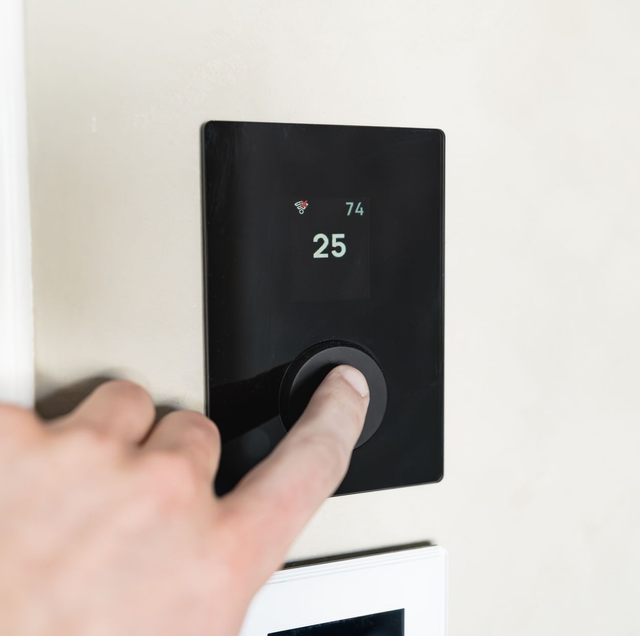
Quick Answer: A thermostat that does not match the room is usually caused by where it sits (sun, a nearby vent, a lamp, or an exterior wall skewing its reading), a dirty or drifting internal sensor, a dead battery, or loose wiring. Less often, the thermostat is accurate, and the system cannot keep up, so the room drifts away from the setpoint. Tape a separate thermometer next to the thermostat for an hour to tell a reading problem from a system problem.
You set the thermostat to 72, but the far end of the living room feels closer to 78, or a handheld thermometer on the kitchen counter disagrees with the wall by several degrees. It is one of the most common calls a technician gets, and the fix ranges from a two-minute battery swap to a wiring repair only a pro should touch. The tricky part is that a mismatch can mean two very different things: the thermostat is reading the wrong number, or the thermostat is right and the system cannot deliver the temperature it is asking for. Sorting out which one you have is most of the battle.
Why The Number On The Wall And The Air In The Room Disagree
A thermostat does one job: it measures the air touching its own sensor and switches the system on or off to hold that number. Everything that goes wrong is a variation on the sensor getting bad information, losing power, or getting a correct reading that the rest of the house never catches up to. Here are the causes worth walking through, roughly from most to least common.
Placement: The Thermostat Is Reading A Lie: The single biggest reason for a mismatch is location. The thermostat reports the temperature of the air right at its faceplate, and if that pocket of air is not representative of the room, the whole house pays for it.
A thermostat in a stripe of afternoon sun can read ten degrees warmer than the room, so in cooling mode the air conditioner runs long past the point the room is comfortable, and in heating mode the furnace shuts off early, and the room stays cold. A supply vent blowing conditioned air across the faceplate does the opposite, tricking the sensor into thinking the whole house has already reached setpoint while the rooms without vents nearby lag. A table lamp, a media console, a TV, or a phone charger sitting inches away throws off a few degrees of its own heat. Mounting on an exterior wall is another quiet offender: that wall runs colder in winter and hotter in summer than the interior air, so the sensor picks up the wall's temperature instead of the room's.
The tell for a placement problem is that the mismatch tracks the time of day or the weather rather than staying constant. If the reading is off every sunny afternoon but fine at night, sunlight is the culprit.
A Dirty or Drifting Sensor: Inside the thermostat is a small temperature sensor, either a bimetallic coil on older mechanical units or a thermistor on digital ones. Dust, cobwebs, and nicotine film settle on that sensor over years and insulate it, so it reacts slowly and reads a degree or two off. Sensors also drift with age; a thermistor's readings can wander as the component gets old, which is why the numbers can be wrong even when placement is perfect, and the room air is really touching the sensor.
This kind of error tends to be small and constant, a degree or two in the same direction all the time, rather than swinging with the sun.
A Dead or Dying Battery: Many thermostats run on AA or coin-cell batteries, and a weak battery does not always shut the screen off cleanly. It can dim the display, cause erratic readings, freeze the temperature on the last number it managed to record, or make the unit lose its connection to the system so the room drifts while the screen still shows the old setpoint. A blinking low-battery icon is the obvious sign, but a battery can be too weak to hold an accurate reading well before that warning appears.
Loose Wiring Or A Missing C-Wire: Behind the faceplate, thin low-voltage wires connect the thermostat to the system. If a wire has worked loose from its terminal, or a wall bump has nudged the thermostat off its backplate, the readings can go erratic, or the unit can behave as if it is not talking to the equipment at all. Smart and Wi-Fi thermostats add a wrinkle here: they draw constant power through a common wire, the C-wire, and a thermostat trying to run without a proper C-wire will "power steal," which can cause dropouts, resets, and a display that no longer matches what the system is actually doing. Anything behind the faceplate is low-voltage wiring, and while it is gentler than household current, it is still a pro repair. Leave the terminals and the equipment board alone.
Setpoint Versus Actual: When The Thermostat Is Right, And The House Is Wrong
Here is the split that trips up most homeowners. The setpoint is the number you asked for. The actual is the temperature the room reaches. When those two do not converge, the thermostat may be reading perfectly and simply cannot get the house there.
The setpoint is like the speed you set on cruise control, and the actual is the speed the car holds going up a steep hill: the dial is honest, the engine just cannot deliver. A few things cause that gap.
Short-cycling is when the system switches on and off in quick bursts without running long enough to even out the temperature across the house. The thermostat satisfies at its own location, shuts down, and the rooms farther away never catch up. Short-cycling has many roots, from an oversized system to a clogged filter to a refrigerant or airflow problem, and it needs a technician to trace.
A system that cannot keep up shows the actual number stuck several degrees from the setpoint and slowly falling behind on the hardest days, hot or cold. An undersized unit, low refrigerant, a failing compressor, a dirty coil, or a furnace that is not firing at full capacity all produce the same symptom: the thermostat keeps calling, the equipment keeps running, and the room still drifts. This is a system problem, not a thermostat problem, and no amount of recalibrating the wall unit will close the gap.
Airflow and room-to-room imbalance explain why one room disagrees with the thermostat even when the house as a whole is fine. Closed or blocked registers, crushed or leaky ducts, a filter choked with dust, and long runs to far bedrooms all leave certain rooms warmer or cooler than the hallway where the thermostat lives. The thermostat is telling the truth about its own spot; the rest of the house just is not matching it.
The One-Minute Check That Tells You Which Problem You Have
Tape a small dial or digital thermometer to the wall right next to the thermostat at the same height, and give them fifteen to twenty minutes to settle. If they disagree by more than a degree or two, the reading is off, but if they agree and neither matches the setpoint, the problem is the system, not the thermostat.
If the two disagree by more than a degree or two, the thermostat's reading is truly off, and you are looking at a sensor, battery, or placement issue. If they agree with each other but neither matches the setpoint, the thermostat is accurate, and the problem is the system's ability to reach the target or move air to the room you are standing in. That single test saves a lot of guessing and tells you whether the next step is a battery or a service call.
What You Can Safely Do Yourself, And What To Leave To A Pro
Some of this is properly a homeowner job. Some of it is not, and the line matters.
Safe to try yourself:
- Replace the batteries with a fresh set, even if the low-battery icon has not appeared yet.
- Gently clean the sensor. Pop off the cover and use a soft brush or a puff of canned air to clear dust and cobwebs off the sensor and contacts. Do not spray liquid cleaner inside.
- Clear the area around the thermostat. Move a nearby lamp, redirect a vent that blows across it, and close a blind if afternoon sun hits the wall.
- Check the air filter and open any closed registers, since a clogged filter and blocked vents cause both drift and rooms that will not reach setpoint.
- If you have a smart thermostat with a separate wireless room sensor, place that sensor in the room you actually want comfortable and let the system average or prioritize it.
Leave to a licensed technician:
- Any low-voltage wiring, loose terminals, or C-wire additions behind the faceplate.
- Recalibrating a thermostat that reads wrong even after cleaning and a fresh battery.
- Any short-cycling, a system that will not reach setpoint, or suspected refrigerant, compressor, or airflow trouble.
- Anything at the furnace, air handler, or control board. Do not open or poke at that equipment.
One safety note that overrides all of the above: if you ever smell burning or gas near the equipment or the thermostat, do not troubleshoot. Leave the area and call a professional, and for a suspected gas leak, get everyone out first.
Frequently Asked Questions
Most residential thermostats are built to hold the room within about one degree of the setpoint, and a factory accuracy spec of plus or minus one degree Fahrenheit is typical. A steady two-degree gap is worth investigating, and anything past three degrees almost always points to placement, a failing sensor, or a system that cannot keep up rather than a normal tolerance.
Many digital thermostats have a temperature-offset or calibration setting buried in the installer menu that lets you nudge the displayed reading by a degree or two to match a trusted thermometer. It is a software adjustment, not a repair, and it only masks a small constant error. If the unit needs more than about two degrees of offset to read true, the sensor is drifting badly enough that replacement or a technician's look is the better call.
Usually not. A thermostat controls the whole system from one spot, typically a central hallway, so a bedroom at the end of a long duct run will naturally read warmer or cooler. Balancing dampers in the ductwork, adjusting individual registers, or adding a zoning system are the real fixes, none of which involve the thermostat being wrong.
They fail differently rather than more often. Older mechanical thermostats drift as the bimetallic coil ages and as mercury or contacts corrode. Smart units are electronically accurate but depend on a steady C-wire power feed, so their common failure is power-stealing dropouts and resets that leave the display out of sync with the system, not slow mechanical drift.
That is thermal lag, and it is normal within reason. A furnace heat exchanger or the ducts stay hot for a few minutes after the burner stops, so residual warmth keeps raising the room a degree past the setpoint before it settles. Many thermostats manage this with an anticipator or a cycle-rate setting; a large or growing overshoot, though, can signal short-cycling or an oversized system.
Use a thermometer you trust, and verify it first: a cheap dial can be off by several degrees, so check it in an ice-water bath (it should read right at freezing) before you rely on it. Set it at the exact height of the thermostat, since air a foot higher or lower stratifies and reads warmer or cooler. Give it fifteen to twenty minutes beside the thermostat, away from sun and vents. One nuance people miss: a thermostat on an exterior or poorly insulated wall picks up heat conduction from the wall itself, so it can read a degree or two off the true room air even when the sensor is fine, which is a placement problem rather than a calibration one.
Book a thermostat and system check — get your rooms matching the number on the wall again. Hi-Tech Heating and Cooling serves Albuquerque, Rio Rancho, and Corrales. Call (505) 398-4398.
