
Furnace Blowing Cold Air? 7 Reasons and Quick Fixes
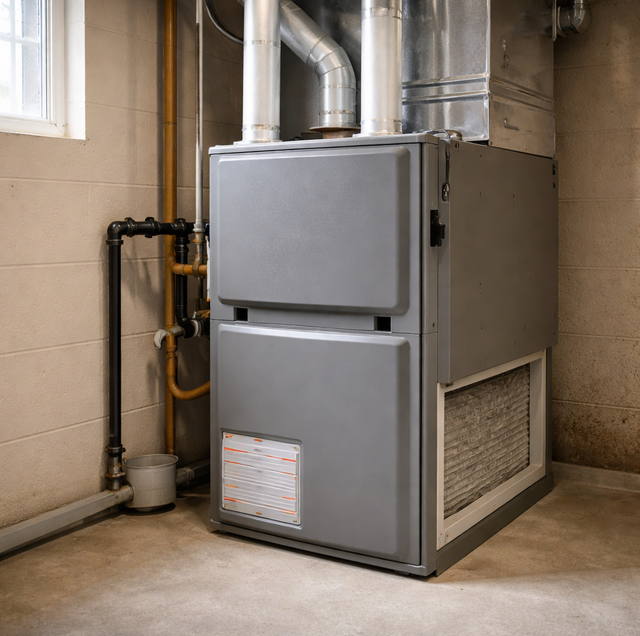
Quick Answer: A furnace blowing cold air is almost always one of a handful of problems: the thermostat fan is set to ON instead of AUTO, a clogged filter is overheating the unit and tripping a safety switch, or a burner issue (dead igniter, dirty flame sensor, no gas, or an out pilot) is stopping the flame. Start with the fan setting and the filter. If the burners never light or the furnace keeps short-cycling, that is a job for a licensed HVAC tech.
Few things rattle a household faster than walking past a vent in the middle of a cold snap and feeling a draft of room-temperature air where heat should be. The good news is that "cold air from the furnace" is a symptom with a short list of suspects, and two of the most common ones you can rule out yourself in under ten minutes. The rest point to a burner or safety component that needs a trained hand. Knowing which is which saves you a service call you did not need, and it keeps you from ignoring a call you very much do need.
How a Furnace Actually Makes Heat
Before chasing the cold air, it helps to know what "warm" is supposed to look like inside the cabinet. A gas furnace runs a short, ordered sequence every time the thermostat calls for heat.
First, a draft inducer motor spins up to clear the flue. Then the ignition source, either a hot-surface igniter or a pilot flame, lights the burners. The burners fire underneath a metal heat exchanger, which heats up like a thick steel radiator. Only after the exchanger is hot does the blower motor switch on and push house air across it and out through the vents. That delay is deliberate: it stops the system from blowing cold air before there is any heat to deliver.
Cold air at the register means one link in that chain broke. Either the blower is running when the burners are not, or the burners tried to fire, and something shut them down. Every cause below traces back to one of those two situations.
The Thermostat Fan Setting: The Most Common and Easiest Fix
Your thermostat has two fan modes, and the difference explains more cold-air complaints than any mechanical fault.
AUTO means the blower only runs when the furnace is actively making heat. ON means the blower runs continuously, all day, whether or not the burners are lit. When the fan is set to ON, it keeps circulating air during the gaps between heat cycles. During those gaps, there is no flame, the exchanger has cooled, and the air coming out is simply room temperature. It feels cold against your skin even though nothing is broken.
Walk to the thermostat and confirm the fan is set to AUTO, not ON. On ON, the blower runs during the gaps between heat cycles when there is no flame, so it pushes room-temperature air that feels cold even though nothing is broken.
A Dirty Filter or Blocked Vents Overheating the System
A furnace needs a steady volume of return air moving across the heat exchanger to carry heat away. Choke that airflow and the exchanger gets hotter than it should. To protect itself, the furnace uses a high-limit switch: a temperature sensor that cuts power to the burners once the cabinet crosses a safe threshold. The blower keeps running to cool things down, which is exactly why you feel air with no heat in it.
The usual culprit behind restricted airflow is a filter packed with lint, pet hair, and airborne debris. Closed or furniture-blocked supply registers and a shut return grille do the same thing. This is a year-round issue, not a winter-only one: the same clogged filter that starves a furnace in January will strangle the air conditioner in July, so the habit of checking it pays off in both seasons.
What to check first: Pull the filter and hold it up to a light. If you cannot see through it, replace it with the correct size and MERV rating. Walk the house and open any closed supply registers, and make sure furniture, rugs, or boxes are not sitting over floor vents or the return grille. Then give the furnace time to cool and try another heat cycle.
If the furnace fires but keeps shutting off on the high limit even after a fresh filter and open vents, stop resetting it and call a professional. A high-limit switch that trips repeatedly is warning you about a deeper overheating problem, and running the unit through repeated overheats is a genuine fire and equipment risk.
Ignition and Flame Problems: Igniter, Flame Sensor, and Pilot
When the burners never light, or light and then quit a few seconds later, the fault sits in the ignition and flame-proving side of the furnace. This category is where most true repairs live.
A failed hot-surface igniter: Modern furnaces light the burners with a hot-surface igniter, a small element that glows like a toaster coil. These are brittle and wear out. A cracked or burned-out igniter cannot light the gas, so the burners never fire and the blower may still cycle, delivering cold air.
A dirty flame sensor: This is one of the sneakier causes. The flame sensor is a thin metal rod that sits in the burner flame and confirms to the control board that a fire is actually present. Over time, it develops a film of oxidation. When the film gets thick enough, the board can no longer "see" the flame, so it assumes ignition failed and shuts the gas valve, often only a few seconds after the burners light. The tell-tale pattern is a furnace that fires briefly, then drops out, over and over.
An out pilot light (older furnaces): Furnaces with a standing pilot rely on a small always-on flame to light the burners. A draft, a clogged pilot orifice, or a bad thermocouple can leave the pilot out, and with no pilot there is no ignition and no heat.
What to check first: For a standing-pilot furnace, you can look through the inspection window to see whether the pilot is lit, and relight it following the instructions printed on the unit. Igniter replacement, flame-sensor cleaning, gas valve service, and control-board work are licensed HVAC tasks that involve gas and live electrical connections, so they are not DIY territory. If the burners will not stay lit, that is your signal to book a tech rather than keep cycling the system.
No Fuel, No Heat
Sometimes the burners are perfectly healthy and simply have nothing to burn. If the gas supply to the furnace is interrupted, the ignition sequence runs, but no flame appears, and the blower pushes cold air.
Check whether other gas appliances in the home are working. If the stove and water heater are also dead, the issue is the gas supply to the whole house, not the furnace. Confirm the manual shutoff valve on the gas line to the furnace is in the open position, running parallel with the pipe rather than across it. If a utility interruption or an unpaid account is involved, that is a call to the gas company.
A Clogged Condensate Line on High-Efficiency Furnaces
High-efficiency condensing furnaces pull so much heat out of the exhaust that the process creates water, which drains away through a condensate line. If that line clogs with sludge or algae, water backs up, and a float safety switch shuts the furnace down to prevent an overflow. The result looks like every other no-heat complaint: the system runs but never delivers warm air.
A furnace with a plastic drain line and a PVC exhaust pipe is the condensing type this applies to. Clearing and treating a blocked condensate line, and confirming the float switch, is best handled by a technician who can also find why it clogged in the first place.
Short-Cycling and Heat Pumps: Two Special Cases
Short-cycling: A furnace that turns on and off in rapid bursts never runs long enough to warm the air fully. Short-cycling can come from overheating, a failing flame sensor, or an oversized system, and it wears out components fast. Treat it as a symptom worth diagnosing, not tolerating.
Heat pumps feel different on purpose: If your home has a heat pump rather than a gas furnace, its "warm" air is naturally cooler than furnace air, often in the low 90s, so it can feel lukewarm even when working correctly. On top of that, a heat pump periodically runs a defrost cycle in cold weather, briefly blowing cool air while it melts frost off the outdoor coil. That temporary chill is normal and ends on its own. Sustained cold air from a heat pump, though, still points to a real fault worth investigating.
Diagnosing a furnace is a lot like a doctor working through a differential: the same complaint can trace to a trivial cause or a serious one, and the skill is in ruling them out in the right order rather than guessing.
When to Stop and Call a Professional
If you smell gas or rotten eggs near the furnace, do not flip any switches, relight a pilot, or hunt for the source. Leave the house and call your gas company or 911 from outside. Keep working carbon monoxide detectors on every level of the home, since a cracked heat exchanger can leak CO into your air, which is odorless and deadly.
Gas valve, heat exchanger, igniter, and control board work all require a licensed HVAC technician. And a high-limit switch that keeps tripping means you shut the system down and get a professional out, rather than resetting it one more time.
Frequently Asked Questions
That end-of-cycle cool puff is usually normal. On an AUTO fan setting, the blower is designed to keep running for a short time after the burners shut off to pull the last of the stored heat out of the exchanger, a feature often called fan-off delay. The final few seconds of air feel cooler because the exchanger has already cooled. If the cool air arrives in the middle of a cycle instead of at the very end, that is a different problem worth checking.
A standard one-inch pleated filter generally needs changing every 60 to 90 days, but the interval shrinks with pets, indoor smokers, or frequent system runtime. Thick four- to five-inch media filters can last six months to a year. The honest test is visual: if light does not pass through it, replace it regardless of the calendar. Sizing matters too, since a filter that is too restrictive for your blower can cause the same overheating a dirty one does.
Yes, in a couple of ways beyond the ON versus AUTO setting. Dead thermostat batteries can leave the display on while dropping the heat call, and loose or corroded wiring at the thermostat terminals can interrupt the signal to the furnace's control board. Some smart thermostats also have an "emergency heat" or auxiliary setting that behaves differently, so a mis-set mode can leave you with weak or cold air even though the furnace itself is fine.
That is the flame sensor, and cleaning it is one of the most common furnace repairs. A technician shuts off power and gas, removes the rod, and lightly polishes the oxidation off with fine abrasive material, never sandpaper, which can leave grooves that hold more residue. Because the job sits inches from the gas burners and live ignition wiring, it is treated as licensed HVAC work rather than a homeowner task, and it is usually paired with a flame-signal reading to confirm the fix.
Intermittent faults usually point to a component on the edge of failing rather than a clean break. A flame sensor slowly building oxidation, an igniter developing a hairline crack, or a pressure switch sticking as debris accumulates will all work until they do not. Temperature swings matter too: a control board or wiring connection can behave when cool and fail once the cabinet heats up, which is why some furnaces quit only after they have been running a while.
Closing too many vents backfires. The blower is sized to move a set volume of air, and sealing off rooms raises static pressure across the system, which restricts airflow much as a dirty filter does. That can push the furnace toward the same high-limit shutdowns that produce cold air, and it strains the blower motor. Leaving most registers open, even in lightly used rooms, keeps airflow in the range the furnace was built for.
Book a heating diagnostic today — get the burners, sensor, and safeties checked before the next cold night. Hi-Tech Heating and Cooling serves Albuquerque, Rio Rancho, and Corrales. Call (505) 398-4398.
