
Whole-House Humidifier: How It Fixes Dry, Static-Filled Air
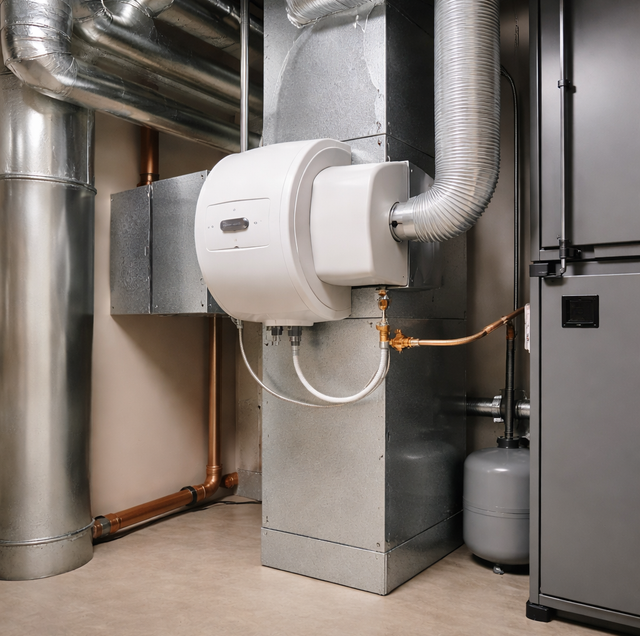
Quick Answer: A whole-house humidifier connects to your furnace and ductwork, adds water vapor to the air the blower circulates, and uses a humidistat to keep indoor humidity in a target range (about 30 to 50 percent). It treats the whole house from one central unit rather than one room at a time.
Dry indoor air rarely announces itself. You notice the symptoms first: skin that tightens after a shower, a static pop when you touch a doorknob, a hairline gap that opened along a hardwood plank. A whole-house humidifier addresses the cause behind all of that by adding controlled moisture to the air your HVAC system already moves through the house, holding indoor relative humidity in a comfortable, healthy band of roughly 30 to 50 percent.
What a Whole-House Humidifier Actually Does
Air holds a certain amount of water vapor, and how much it holds is measured as relative humidity. When that number drops too low, the air starts pulling moisture from everything around it, including your skin, your sinuses, and the wood in your home. A whole-house humidifier puts a measured amount of moisture back into the air stream so the air arrives at a stable, comfortable level in every room the ducts reach.
The goal is a range, not a maximum. Below about 30 percent, the dry-air problems set in. Above roughly 50 percent, moisture starts condensing on cold surfaces and creating conditions where mold and dust mites do well. A properly set unit keeps you in the middle band where the air feels comfortable, and the house stays dry enough to avoid condensation.
That range also affects how warm you feel. Humid air carries heat against your skin more effectively than dry air, so a room at 68 degrees with moderate humidity feels warmer than the same room at 68 degrees when the air is bone dry. People in dry homes often push the thermostat higher chasing a comfort that is really a humidity problem.
How It Ties Into Your HVAC System
A whole-house humidifier is not a standalone appliance you set on the floor. It is built into the heart of your heating and cooling system, which is why it can treat the entire house at once.
The unit mounts on the ductwork near the furnace, usually on the supply or return plenum, the large sheet-metal chambers where conditioned air enters or leaves the air handler. A small water line taps into your home's plumbing to feed the humidifier, and a drain line carries away the water that is not absorbed. The humidifier also wires into the furnace controls so it knows when the blower is running, and air is available to carry moisture.
When the system calls for the blower, air passes across or through the humidifier's wet media, picks up water vapor, and carries that moisture out through the same ducts that deliver heated or cooled air. One central unit, one set of ducts, every room. That integration is exactly why installation is a job for an HVAC technician rather than a DIY afternoon: it involves cutting into ductwork, tapping a water line, and wiring into the furnace, and mistakes on any of those can cause leaks, water damage, or a system that runs when it should not.
Why Indoor Air Gets So Dry
Cold outdoor air holds very little moisture. When your furnace heats that air, the relative humidity drops even further, so running the heat almost always dries the house out. Air conditioning does the opposite job but with the same drying result: as the system cools air, moisture condenses on the cold coil and drains away, and the air that returns to your rooms is drier than it started.
Add in air that leaks in around doors, windows, and gaps in the building envelope, and a home can spend long stretches sitting below a comfortable humidity level regardless of the season. A whole-house humidifier exists to counter that steady moisture loss.
The Problems Low Humidity Creates
When the air is too dry, it takes moisture wherever it can find it, and the effects show up across the house.
- Dry skin, lips, and sinuses: The air pulls moisture from your body, leaving skin tight and nasal passages irritated. Many people find breathing feels harsher and coughs linger in a dry house.
- Static electricity: Low humidity lets static charge build instead of dissipating, so you get shocks off doorknobs and clothing that clings.
- Cracked and shrinking wood: Hardwood floors develop gaps between planks, trim and furniture joints loosen, and musical instruments fall out of tune. Wood is constantly giving up or absorbing moisture to match the air, and dry air makes it shrink.
- Feeling colder than the thermostat reads: As dry air wicks moisture and heat from your skin, a properly heated room still feels chilly, which tempts you to run the heat harder than you need to.
The Three Types and How Each Adds Moisture
Whole-house humidifiers come in three main designs. They all raise humidity, but they get water into the air stream in different ways.
Bypass humidifiers: A bypass unit routes a portion of warm air from the supply duct back through the humidifier, across a wet evaporator pad, and into the return, where it rejoins the circulating air. It relies on the furnace's own airflow and warmth to evaporate the water, so it has no fan of its own. It is a common, uncomplicated choice, though it needs the blower to be running to do its work.
Fan-powered humidifiers: A fan-powered unit adds its own small fan that pushes air across the wet pad instead of borrowing airflow from the duct. That fan lets it evaporate more water and work even during short blower cycles, so it generally adds moisture faster than a bypass model. It does draw a small amount of electricity to run the fan.
Steam humidifiers: A steam unit heats water to a boil inside the humidifier and injects actual water vapor into the duct. Because it makes its own steam, it does not depend on furnace heat and can add humidity precisely and quickly, including when the system is only running the fan. It is the most capable of the three and also the most involved to install and operate.
The Humidistat: The Control That Keeps It Balanced
Every whole-house humidifier is governed by a humidistat, the humidity equivalent of a thermostat. You set a target percentage, the humidistat reads the actual humidity, and it turns the humidifier on only when the air falls below your setting. Once the house reaches the target, the unit stops adding moisture.
Getting that setting right is what keeps the system healthy. Too low and the dry-air problems return; too high and you invite condensation. Many humidistats can be dialed back as outdoor temperatures drop, since very cold windows condense moisture more readily, so the ideal indoor setting is not a single fixed number year-round.
Why Too Much Humidity Is Also a Problem
A humidifier that runs unchecked causes as much trouble as dry air does. Push indoor humidity past roughly 50 percent and water vapor starts condensing on the coldest surfaces in the house: window glass, the inside of exterior walls, and cold corners. Persistent condensation feeds mold growth and dust mites, and it can leave water where you do not want it.
The point of a whole-house humidifier is a balanced middle, not maximum moisture. The humidistat, correct sizing, and seasonal adjustment are what keep it on the right side of that line. If you ever see fog on your windows that will not clear, the humidity setting is too high and should come down.
Aim for a balanced middle of roughly 30 to 50 percent, not maximum moisture. If you ever see fog on your windows that will not clear, the humidity setting is too high and should come down.
Maintaining a Whole-House Humidifier
Because a humidifier constantly runs water across a pad or through a tank, it needs routine upkeep to stay clean and effective. Standing water and a dirty pad are exactly the conditions that let microbes and mineral scale build up, so maintenance is a health issue, not just a performance one.
- Replace the evaporator pad: On bypass and fan-powered units, the wet pad (also called a water panel) collects mineral scale over time and should be swapped on a regular schedule, typically once per season of heavy use or as the manufacturer directs. Hard water clogs pads faster.
- Clean the unit and clear the drain: Flush out mineral deposits, wipe down the interior, and make sure the drain line is not blocked so water moves through instead of pooling.
- Handle the seasonal changeover: Many homeowners run the humidifier during heating months and shut its water supply off when it is not needed, then clean it before starting it up again. A technician can service it during a regular HVAC visit.
Steam units have their own cleaning needs around scale in the boiling chamber, and any water-line or electrical service on these systems is work for an HVAC technician rather than a homeowner.
How It Differs From a Portable Room Humidifier
A portable humidifier is a countertop or floor appliance you fill by hand, plug into an outlet, and run in one room. It humidifies the space around it and nothing more, and you refill and clean it constantly.
A whole-house humidifier is plumbed into your water supply, wired into your furnace, and connected to your ductwork, so it treats every room the HVAC system serves from one location and refills itself automatically. The portable unit is a spot fix for a single room; the whole-house system is a permanent, hands-off solution built into the home.
Frequently Asked Questions
A common indoor target sits between 30 and 45 percent, but the right number shifts with the weather outside. As outdoor temperatures fall, lower the setting a few points to keep moisture from condensing on cold window glass. A practical rule some technicians use: if condensation forms on your windows and stays, drop the setting by about 5 percent until it clears.
The water a humidifier uses is small compared to household fixtures. A typical unit draws roughly a few gallons a day during active use, far less than a single load of laundry, so the impact on your water bill is minor. Steam models use somewhat more because they boil water to make vapor.
Usually you would not, because air conditioning already removes moisture and summer air often carries enough humidity on its own. Most homeowners shut the humidifier's water supply off during cooling months. A steam unit can add humidity independent of the furnace if a space stays too dry, but that is the exception rather than the rule.
Balanced humidity can reduce airborne dust and ease irritated sinuses, which some allergy sufferers notice. The caution is the ceiling: dust mites and mold thrive above about 50 percent humidity, so overshooting the target can worsen allergies rather than help. The benefit comes from staying in the balanced middle band.
Most water panels last one heating season under normal use, but hard water shortens that. Mineral scale builds up as a white crust that stiffens the pad and blocks airflow through it, so in areas with very hard water a pad may need changing more than once a season. A stiff, crusty, or discolored pad is the visual cue to swap it.
A fan-powered or steam unit pairs well with variable-speed and shorter blower cycles because it does not depend entirely on the furnace pushing warm air across the pad. A bypass unit needs the blower running and warm supply air to evaporate water, so on systems that run in low, cool stages it may add moisture more slowly. The right match depends on your specific furnace, which a technician can assess.
Ask about a whole-house humidifier sized for your system — steady, balanced comfort in every room. Hi-Tech Heating and Cooling serves Albuquerque, Rio Rancho, and Santa Fe. Call (505) 398-4398.
