
Why Your Heat Pump Blows Cool Air (Not Always a Problem)
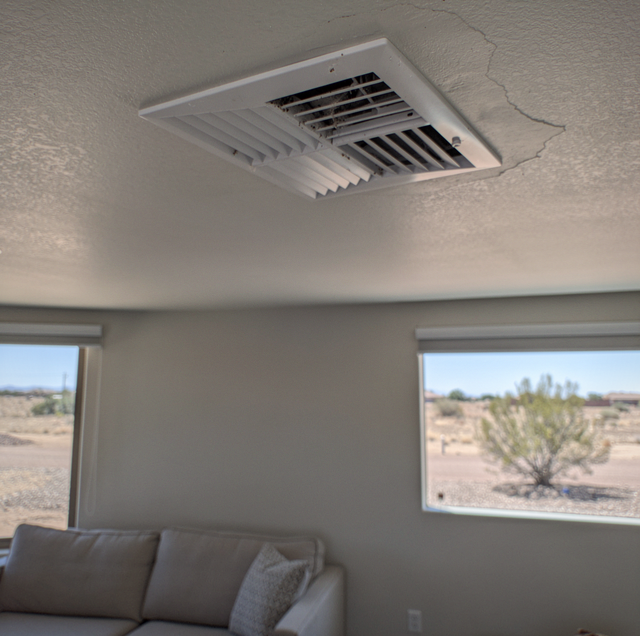
Hold a hand in front of a heat pump's supply register while it's heating correctly, and the air can still feel cool against skin even though the equipment is doing its job. This is the heat-pump-specific answer to that feeling: a gas furnace either produces a hot blast of combustion heat or it doesn't, so a furnace's cold-air complaints trace back to burners and ignition, not to a system moving already-existing heat at a lower delivered temperature.
That distinction matters before running through what could actually be wrong. A real share of the people asking why their heat pump is blowing cool air do not have a broken system; they have a heat pump behaving normally, judged against the expectation set by a furnace or a space heater. The rest have a shorter list of real faults, most tracing to the reversing valve, the defrost cycle, or the backup heat stage rather than one cool breath of air. What follows separates the two: what a heat pump does by design that can feel like a problem, and what actually is one.
Quick Answer: Warm-but-not-hot air at the registers is normal heat-pump operation. A short, cold stretch that recovers on its own is the defrost cycle, which is also normal. Air that stays cold or airflow that stays weak points to a fault that needs diagnosis.
Why the Air Feels Cool Even When Your Heat Pump Is Working
| What You Notice | What's Behind It | Homeowner Check or Technician Task |
|---|---|---|
| Air is warm-ish, never hot, but the room keeps climbing toward the setpoint | Normal heat-pump operation | Homeowner: watch the thermostat over time rather than judging by hand |
| Air turns cold for a stretch, then warms back up without any help | The defrost cycle clearing frost from the outdoor coil | Homeowner: no action needed once it recovers on its own |
| Air stays cold no matter how long the system runs | A fault in the refrigerant circuit or the reversing valve | Technician: gauge readings and a reversing-valve check |
| Outdoor unit is coated in ice or packed with snow and stays that way | Blocked airflow at the outdoor coil | Homeowner: clear debris at ground level; the ice itself is technician work |
| Airflow feels weak and cool, filter hasn't been checked recently | A loaded filter or blocked return restricting airflow | Homeowner: check and swap the filter first |
| System is on emergency heat and still isn't keeping up | Backup heat's own controls or staging, not the heat pump itself | Technician: trace the backup-heat circuit |
A heat pump moves heat that already exists rather than burning fuel to create it, so its supply air runs warmer than the room but cooler than furnace air by design, not by fault. In heating mode, the refrigerant cycle runs in reverse from how it runs in summer: the outdoor coil works as the evaporator, pulling heat from outside air even when that air feels cold, because the refrigerant moving through it runs colder still. A compressor raises the refrigerant's temperature and pressure, and the reversing valve, controlled by its own solenoid coil, routes the now-hot refrigerant to the indoor coil rather than the outdoor one. The indoor coil releases that heat into the airstream, and the blower pushes the warmed air out through the ducts and registers. A hand at a register measures against skin temperature, not room temperature, so warm-but-not-hot air can read as cool even while the system does exactly what it's designed to do; watching the thermostat over time is the steadier check than judging by feel.
The Defrost Cycle: Why the Air Turns Cold, Then Warms Back Up
Because the outdoor coil pulls heat from outside air, its surface can run cold enough that moisture in the air can condense and freeze onto it, especially in damp or near-freezing conditions. Left alone, that frost buildup would eventually block airflow through the outdoor coil, preventing it from absorbing heat at all.
A defrost board or control tracks coil temperature and run time and periodically interrupts normal heating to clear that frost. When it triggers, the reversing valve briefly flips the cycle back toward cooling, sending hot refrigerant to the outdoor coil to melt the ice, while the indoor side stops receiving heated refrigerant. Depending on the system, the indoor blower either pauses or keeps moving unwarmed air, which is exactly when a homeowner standing near a register feels distinctly cold air. Once the coil clears, the system reverts to normal heating on its own.
A pattern is more useful than a single instance: note roughly how many separate defrost events happen within an hour, and whether the outdoor unit was iced, snow-covered, or clear beforehand, then share those details when calling for service.
This is a normal, self-resolving part of how a heat pump handles cold or humid conditions, not a malfunction. It becomes a problem only when the cold air doesn't recover, or the outdoor unit stays iced over long after a defrost cycle should have cleared it.
When the System Is Stuck in Cooling Mode
If the reversing valve or its solenoid coil fails, the valve can stick in the cooling position, sending hot refrigerant to the outdoor coil instead of the indoor one, regardless of what the thermostat calls for. The indoor coil then behaves like an evaporator instead of a heat source, pulling heat out of the indoor air rather than adding to it, producing the coldest air on this list. The same failure works both ways: a valve stuck the other way during cooling season strands a system in heating mode and blows warm air when the household wants cold.
A thermostat configured or wired incorrectly for a heat pump system can produce a similar symptom without any hardware failure. A setup that's misconfigured, often after a thermostat swap or system change, can leave the valve calling for cooling even while the display reads "heat." Confirming the thermostat's mode setting is something a homeowner can safely check; the wiring behind it is not.
A Refrigerant Charge Problem
Refrigerant charge is the amount of refrigerant circulating through the system, and it has to fall within a fairly specific range for the heat pump to move heat efficiently. Too little refrigerant, whether from a slow leak or an incomplete prior charge, reduces the amount of heat the system can absorb outdoors and release indoors, so even with a healthy compressor and clean airflow, the heat delivered to the room falls short and feels cooler than it should. A charge problem from a leak tends to develop gradually rather than showing up all at once, and it typically affects both heating and cooling since both modes share the same refrigerant circuit. Diagnosing it requires measuring refrigerant pressures with gauges connected to the sealed system, which is technician work: refrigerant work is handled by certified technicians, and those readings aren't something a homeowner can check from outside the cabinet.
Airflow Starvation Makes Delivered Air Feel Weak and Cool
Even a heat pump producing correctly heated refrigerant needs enough air moving across the indoor coil to carry that heat into the room. A loaded filter restricts how much air the blower can pull through, a blocked or undersized return starves the system of air to move, and a dirty indoor coil puts a layer of debris between the refrigerant and the airstream, cutting how much heat crosses into the passing air. Any one of these leaves supply air measurably cooler and weaker, even with a healthy refrigerant side.
Checking and swapping a loaded filter is one of the few things a homeowner can safely do before calling for service, along with confirming supply registers are open and unblocked by furniture or rugs. A blocked return or a dirty indoor coil goes beyond a filter check and is worth a technician's look.
An Outdoor Unit That's Iced Over or Blocked
Some frost on the outdoor coil during a heating cycle is routine and clears on its own through the defrost cycle. An outdoor unit that stays heavily iced over, gets packed in with snow, or has leaves and yard debris built up around its cabinet is different: it can no longer pull enough heat from the outside air, so the system either underperforms or the compressor shuts itself down to protect itself. That's a different event from indoor-coil icing during cooling season: outdoor icing in heating mode is typically due to blocked airflow or a defrost failure, not the filter or charge problems that cause an indoor coil to ice over in summer.
A homeowner can safely clear snow, leaves, or debris from around the base of the outdoor unit at ground level to restore airflow.
Chipping ice off the outdoor coil, pouring hot water over it, or opening a panel can damage the coil and the sealed refrigerant circuit underneath. Ice needs to clear through the system's own defrost cycle or a technician's visit, never manual force.
Auxiliary or Emergency Heat Not Coming On
Every heat pump system has a backup heat source, electric heat strips built into the air handler, that supplements the heat pump once outdoor temperatures drop past the balance point, the point at which the heat pump alone can no longer keep up with how fast the house loses heat. A technician can roughly identify where that point lies for a given home. The thermostat's emergency heat setting is a separate, deliberate mode that bypasses the heat pump entirely and runs the house on backup strips alone, meant as a bridge while a repair is pending, not an everyday setting.
When backup heat should be helping on a cold day but doesn't engage, or when emergency heat is selected and the house still isn't gaining ground, the cause usually lives in the backup heat's own controls or staging, not the heat pump itself, and isn't something to trace out from the thermostat.
Sorting a normally cool-feeling heat pump from an actually faulty one comes down to that same split running through every section above: warm-but-not-hot air and a brief defrost dip are the system working as designed, while cold air that doesn't recover, ice that doesn't clear on its own, or backup heat that doesn't engage are the signals worth a service call.
Frequently Asked Questions
Yes. At the very start of a heating cycle, the blower can begin moving air across the indoor coil slightly before the refrigerant reaches full temperature, producing a brief cool puff even in a healthy system. It settles into warm air within moments and isn't related to the longer cold-air stretch of a defrost cycle.
It can. A two-stage or variable-capacity compressor often runs at a lower stage for milder heating loads, moving more air at a gentler heat output rather than running at full capacity like a single-stage system. That airflow can feel cooler at the hand even though the system is satisfying the thermostat exactly as intended.
Yes. Outdoor units have their own disconnect switch near the cabinet, and if it gets bumped or left off after nearby work, the indoor blower can still run on a call for heat while the outdoor unit does nothing, delivering unheated air even though the thermostat looks normal.
The electric heat strips run on their own dedicated circuit breaker, separate from the one powering the compressor and outdoor unit. If that breaker trips, the heat pump side of the system can keep operating normally while the backup heat never engages when it's needed, which shows up as the house falling behind on the coldest days specifically.
Heat-pump thermostats use an O or B terminal to energize the reversing valve, and manufacturers don't agree on which one calls for cooling versus heating. A heat pump or thermostat carried over from a different brand or system can end up wired to the convention it wasn't designed for, which effectively reverses the modes without anything being mechanically broken.
Yes. A fresh-air ventilation system, such as an energy- or heat-recovery ventilator tied into the same ductwork, introduces outdoor air at its own connection point. A register near that connection can feel cool independent of the heat pump, which can look like a heating problem when it's actually the ventilation equipment working as intended.
Get your heat pump's heating cycle inspected — a technician can confirm whether what you're feeling is normal operation or an actual fault. Hi-Tech Heating and Cooling serves Albuquerque, Rio Rancho, and Corrales. Call (505) 398-4398.
