
Repair or Replace: When Is an AC Worth Fixing?
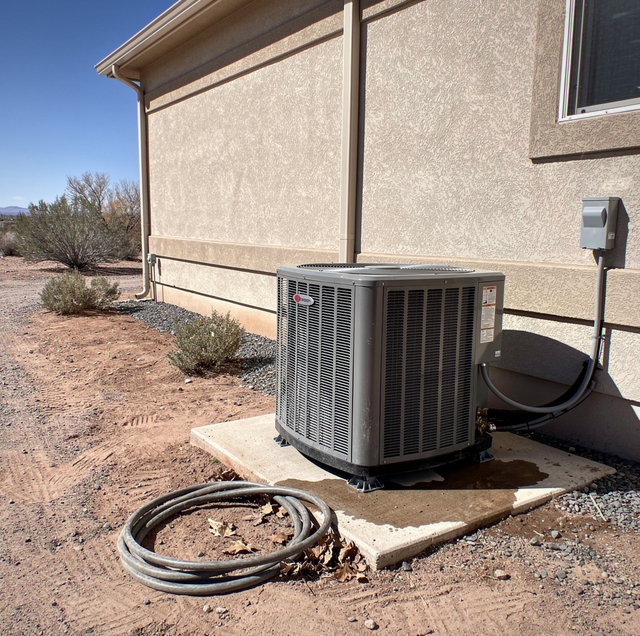
An air conditioner rarely fails all at once. It shows up as one repair call, then another a year or two later, then a third that costs noticeably more than the last two combined. At some point, almost every homeowner ends up asking the same question: is this system still worth fixing, or does that repair money belong toward a new one instead? The answer depends less on how the unit is behaving on any single afternoon and more on four factors working together: how old it is, how often it's needed a repair crew, what refrigerant it runs on, and how much efficiency you're giving up by keeping it running.
How Age Stacks Up Against Expected Lifespan
Most central air conditioners are built to run somewhere between twelve and fifteen years, with well-maintained systems occasionally pushing past that and neglected ones falling short of it. Age alone doesn't tell the whole story, but it changes how much weight a given repair should carry.
A unit under eight or nine years old that needs a capacitor, a fan motor, or a similar component swap is still well within its expected working life. That kind of repair is a normal maintenance event, not a warning sign. The math looks different once a system passes the ten-to-twelve-year mark, especially if the failing part is a major one like the compressor or the outdoor coil. At that stage, a repair only buys back a year or two of use from a system that's already well into its expected run, while a replacement resets the clock on the whole decade-plus ahead.
What Repair Frequency Is Actually Telling You
A single repair call, on its own, says almost nothing about whether a system is failing. What matters is the pattern over time. A unit that needed one minor fix two summers ago and hasn't needed anything since is behaving normally. A unit that's been called for service twice this season, after going years without a single visit, is showing a different kind of trend: components are wearing out broadly rather than a single part simply reaching the end of its life.
Tracking that pattern is worth doing on paper, not just from memory. Note the date, the part, and the general reason for each service call. If the gaps between calls keep shrinking, that's the clearest sign the system is heading toward a bigger failure rather than settling back into steady operation. Isolated, spaced-out repairs point toward fixing the system. Repairs that keep bunching closer together point toward retiring it.
Why Refrigerant Type Changes the Calculation
Refrigerant is one of the least visible parts of this decision, and one of the most important. Older systems, roughly a decade or more old, commonly run on a refrigerant type that regulators have been phasing out for years. Once a refrigerant is on that path, supply keeps shrinking, which makes it harder to source and the cost curve moves in only one direction over time.
That matters because a refrigerant leak is one of the more common reasons an aging AC needs a repair. If the leak is in a system that runs on an older, increasingly scarce refrigerant, that single repair can become a much bigger expense than a similar leak in a newer unit that uses a current refrigerant. Newer systems use refrigerant types with long-term production and support, so a comparable repair years down the road won't face the same sourcing squeeze. When a refrigerant-related repair comes up on an older unit, it's worth asking your technician directly what refrigerant the system uses and how available it currently is, since that answer can shift the whole decision.
The Efficiency You Give Up by Repairing an Old System
Fixing a broken part restores a system to its previous condition. It doesn't touch how efficiently that system was running to begin with. Efficiency standards for air conditioners have climbed steadily over the past couple of decades, and equipment built even ten years ago typically can't match what a current model delivers on the exact same square footage. Compressor design, coil surface area, and variable-speed operation have all improved enough that a new system often uses meaningfully less energy to produce the same amount of cooling.
That gap doesn't show up as a repair line item. It shows up quietly, month after month, in how hard the system has to run and how long its cycles last. A repair fixes what broke. It doesn't recover any of that ongoing efficiency deficit, and an aging unit that's just been repaired will keep running at its original efficiency level, or worse, since wear on other components tends to chip away at performance even between failures.
A Simple Ratio Worth Applying
Contractors have long used a rough guideline for weighing a repair against a replacement without needing to compare exact figures: if a repair's cost represents roughly half or more of what a full system replacement would run, that repair usually isn't worth doing on its own merits. The guideline gets stronger the closer a system is to the far end of its expected lifespan, and weaker for a young system with an isolated, minor failure.
You don't need exact numbers to use this ratio. Ask your technician, in plain terms, what fraction of a new system's price this particular repair represents. A capacitor or a run of refrigerant topping-off usually sits nowhere near that threshold. A compressor replacement or an evaporator coil swap on an older unit often gets uncomfortably close to it, and that's exactly the point where the ratio earns its keep as a decision tool.
Signs It's Time to Stop Repairing
A few patterns tend to line up together when a system has truly reached the end of its useful repair life:
- The compressor or coil fails on a unit already past ten to twelve years old
- Repairs have been needed more than once in the same cooling season
- A refrigerant leak turns up in a system using an older, harder-to-source refrigerant
- Energy bills keep climbing even though the system has just been serviced
- The system struggles to keep up on ordinary days, not just the hottest ones
None of these signs alone guarantees that replacement is the right move. Together, especially when two or three line up at once, they're a strong indication that further repairs are just delaying the inevitable rather than solving anything.
When Repair Still Makes the Better Case
Plenty of situations still favor fixing the system over replacing it. A unit under warranty should almost always be repaired rather than replaced, since the manufacturer or installer absorbs part or all of the cost. A young system, generally under eight to ten years old, with an isolated failure unrelated to age (a blown capacitor, a failed contactor, a bad thermostat connection) is a normal repair, not a signal to start shopping for new equipment. A system that's been maintained on a regular schedule, with clean coils and routine filter changes, also tends to earn more years of reliable service than one that's been neglected, which shifts the math further toward repair for any given failure.
The condition of the rest of the home's system matters too. Ductwork, thermostat, and airflow all play into how well any AC performs, regardless of its age. A repair paired with a broader tune-up often resolves more of the underperformance than either fix would alone.
Making the Call With Confidence
None of these four factors- age, repair frequency, refrigerant type, and efficiency- settles the question by itself. A young system with a scary-sounding but minor repair is still worth fixing. An older system with a cheap fix and no other warning signs might still have a few good years left. The decision gets clearer when you look at all four together and see whether they're pointing the same direction.
A qualified technician can give you a straight read on where your specific system stands: the actual age, the real repair history if it's been serviced by the same company, the refrigerant type and its current availability, and a realistic comparison of running cost against current equipment. That kind of assessment, done before a repair rather than after, turns a stressful in-the-moment decision into a planned one.
Frequently Asked Questions
There's no single cutoff, but the calculation shifts meaningfully once a system passes ten to twelve years, especially if the failing part is a major component like the compressor or coil. Below that age, most repairs are still worth doing. Past it, each repair buys back proportionally less remaining life, which tips the balance toward replacement.
It depends on the repair. Minor electrical or mechanical fixes are usually still worth doing regardless of refrigerant type. A refrigerant leak repair is different, since sourcing an older, phased-out refrigerant becomes harder and pricier over time, which can make that specific repair a much stronger signal to consider replacement instead.
Watch the pattern rather than a fixed number. One isolated repair every few years is normal wear and tear. Two or more repairs within a single cooling season, especially with the gaps between them shrinking, point to broader component wear rather than a single part simply failing on its own.
Generally, yes. Efficiency standards and equipment design have improved enough over the past couple of decades that a current system usually needs less energy to produce the same amount of cooling as one built ten or more years ago. A repair restores a system to its prior condition, but it doesn't close that efficiency gap.
It's a rough rule of thumb: if a repair's cost represents about half or more of what a full replacement would run, that repair usually isn't the better financial move on its own. It's meant as a quick gut-check rather than an exact formula, and it carries more weight the older and less efficient the existing system already is.
Sometimes, yes, particularly if it's past its expected lifespan, has needed repeat repairs, and runs on an older refrigerant with rising sourcing costs. A system doesn't have to fail completely before replacement becomes the more sensible choice. A technician can compare its current condition and running cost against a new system to help you see whether waiting for a full breakdown actually saves anything.
Not sure if your AC is worth another repair? — Get a straight repair-or-replace assessment from an experienced HVAC technician before you spend on the wrong fix. Hi-Tech Heating and Cooling serves Albuquerque, Rio Rancho, and Corrales. Call (505) 398-4398.
