
How Fine Dry-Climate Dust Wears Down Your HVAC System
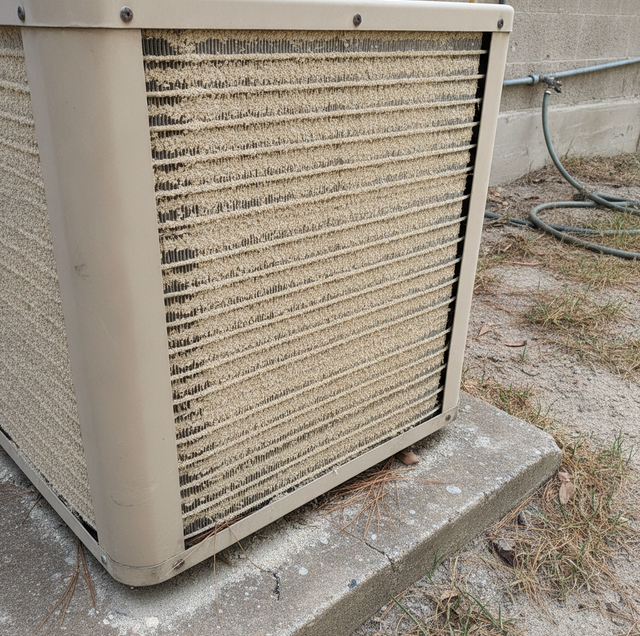
Fine, dry-climate dust is not the same as ordinary household dust. It is finer, drier, and constantly on the move, kicked up by afternoon wind and driven hard during windy, stormy stretches, then settling again on calm mornings when a heater pulls it back indoors. That grit does not stay outside. Your HVAC system spends the whole year moving air through your home, and every cubic foot it moves carries a little of that fine mineral powder into the filter, coils, blower, and ductwork. Nothing about it announces itself. The system keeps running, the house keeps cooling and heating, and the wear builds up out of sight until efficiency has slipped and a part finally protests. This is a tour of exactly where the dust lands and what it does at each stop.
Where The Dust Hits First: The Air Filter
The filter is the front line, and in a dusty climate, it fills far faster than the packaging suggests. A one-inch pleated filter that a manufacturer rates for ninety days can be visibly gray in half that time here, because the pleats are trapping mineral dust that a wetter climate never produces in the same volume.
A loaded filter does not just stop catching dust. It chokes the airflow that the whole system depends on. The blower has to pull harder to draw the same volume of air through a clogged mat, which strains the motor and drives up the energy it burns. Worse, when airflow across the indoor evaporator coil drops too low in cooling mode, the coil can get cold enough to freeze. A sheet of ice forms over it, and once that happens, the system stops cooling almost entirely while the compressor keeps laboring. A filter you can no longer see light through is not a minor housekeeping item in this environment. It is the single most common reason a healthy system suddenly underperforms.
The Indoor Evaporator Coil: An Insulating Blanket Of Grit
Even with a filter in place, no filter catches everything, and the finest dust slips through to settle on the evaporator coil inside your air handler. This coil is where the refrigerant absorbs heat from your indoor air, so it needs bare metal fins in direct contact with the airstream to do its job.
Dust settling on those fins acts like a thin blanket. It insulates the coil from the very air it is supposed to be cooling, so heat transfer drops, and the system has to run longer to reach the same temperature. This decline is gradual and quiet, which is what makes it costly. You rarely notice the day the coil got dirty; you notice a summer where the system seems to run and run without the house feeling as cool as it used to, and the electric bill creeps up to match.
The Outdoor Condenser: Coils And Fins Caked In Powder
Outside, the condenser has the opposite job. It sheds the heat your system pulled out of the house, dumping it into the outdoor air across another set of coils and a dense grid of thin aluminum fins. That unit sits at ground level, drawing air in from all sides, which makes it a magnet for blowing dust, grass clippings, and cottonwood fluff.
When dust cakes the condenser coil, the same insulating problem happens outdoors, and the consequences are harsher. The system cannot release its heat, so it runs hot and long; the compressor works against higher pressures, and efficiency falls off. The fins make it worse: they are packed close together, and once mineral dust and debris bridge the gaps, air can no longer pass through the coil at all. A condenser that cannot breathe is a condenser running near the edge of what its compressor was built to tolerate.
The Ductwork: Where Dust Hides and Recirculates
Finally, some dust settles inside the duct runs themselves, coating the sheet metal and flex line that carry conditioned air to every room. Ducts are hard to see into, so this buildup is easy to forget, but it matters for two reasons.
First, a heavy layer of debris narrows the effective size of the ducts and adds resistance, so the blower delivers less air to the rooms farthest from the unit. Second, and more noticeable, every time the system kicks on, it stirs that reservoir and pushes a fine haze of dust back into the living space. If anyone in the house deals with allergies or dust sensitivity, ductwork that has quietly loaded up over the years can keep the indoor air feeling gritty, no matter how often you dust the furniture. Leaky duct joints make both problems worse because they let unfiltered dust from the attic and crawlspace be drawn directly into the supply air.
Keeping The Grit Out Of A System That Runs All Year
The through-line is that fine dust attacks the same system in four places at once, so keeping it out is about habit more than any single fix. Check the filter far more often than the box tells you, get the coils inspected and cleaned on a schedule, keep the outdoor unit clear, and seal the duct joints so the system is only breathing air it has actually filtered. None of these is dramatic, and that is the point: dust damage is slow and cumulative, so the defense is steady and routine. A system that is cleaned and checked before each heavy-use stretch will hold its efficiency for years in an environment that quietly erodes systems left alone.
Frequently Asked Questions
Ignore the "90 days" printed on a one-inch filter; that number assumes a low-dust home. Here, pull the filter and hold it up to a light every month during windy, stormy stretches. Most one-inch filters need replacing every thirty to sixty days in a dusty, dry climate, while a thicker four-inch media filter may stretch to several months, and a five-inch cabinet filter can sometimes run close to a year. Let what you see on the filter, not the calendar, make the call.
MERV measures how fine a particle a filter captures, and it is tempting to grab the highest number for a dusty home. The catch is that a denser filter resists airflow more, and a MERV rating that your blower cannot pull air through will starve the coil and mimic the exact clogging problem you were trying to avoid. For most residential systems, a mid-range MERV rating, roughly 8 to 11, captures fine dust while still allowing the blower to move its rated airflow. Going higher usually calls for a system built to handle the added resistance, so it is worth confirming before you upgrade.
Watch for three early tells. Airflow at the registers feels weak even with the fan running, so the room takes forever to cool. In the cooling season, you may find a layer of frost or solid ice on the refrigerant line or the indoor coil, which is the frozen-coil failure starting. And the electric bill climbs because the blower and compressor are running longer against the restriction. Any one of these means check the filter first, before you assume something expensive has failed.
The outdoor coil's only job is to release heat, and it does that by passing outdoor air across hot refrigerant. When dust clogs the coil blocks that block airflow, the refrigerant cannot cool down enough, so it returns to the compressor still warm and under higher pressure. The system responds by running longer cycles to hit your thermostat setting, and the compressor runs hotter than designed. Over time, the added heat and pressure are what shorten a compressor's life, which is the most expensive part in the whole unit.
Keep a clear zone of about two feet around all sides of the condenser so it can draw air freely, and trim back any shrubs, tall grass, or gravel that blows into it. Rinse the fins gently with a garden hose from the inside out when they look dusty, using low pressure so you do not bend the soft aluminum. Avoid stacking anything against the cabinet or covering it fully in a way that traps moisture, since trapped dampness plus dust invites corrosion on the fins.
Start by finding out where the dust is getting in, because in most Albuquerque homes the ducts are the symptom rather than the source. A leaky return pulling air from an attic or crawlspace draws unfiltered dust straight into the system, and no amount of attention to the ducts themselves fixes that. A pressure test locates the leaks, and sealing them stops the supply at its origin. From there, a filter matched to your system and changed on schedule catches what does get in. If your registers are visibly shedding debris, or you suspect moisture or pests inside the runs, that is a different problem and worth an inspection before anything else.
Book a coil and filter tune-up before your next dusty stretch — keep your system breathing clean and running efficiently. Hi-Tech Heating and Cooling serves Albuquerque, Rio Rancho, and Corrales. Call (505) 398-4398.
