
Ductless Mini-Split vs. Central AC: Which Fits Your Home?
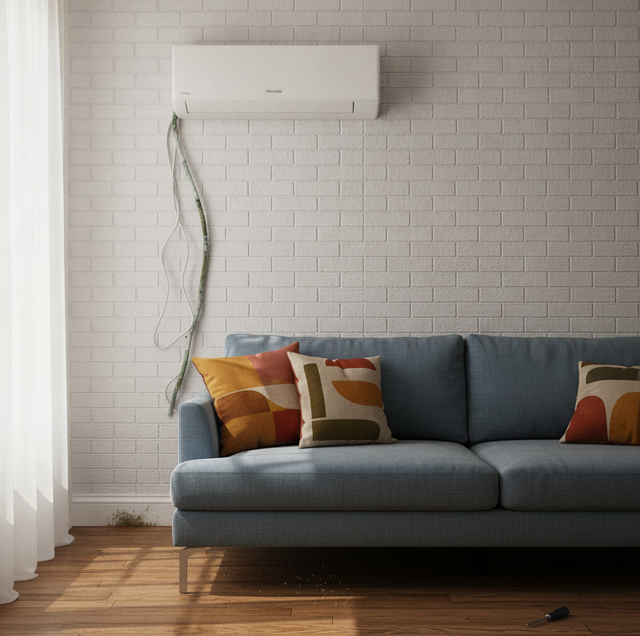
You need to cool your home better, and the choice has come down to two very different systems: a central air conditioner that pushes cold air through ducts to the whole house, or a ductless mini-split that mounts units on the walls and cools room by room. They both cool, but they go about it so differently that the right one depends entirely on your house and how you live in it.
The fastest way to decide is to understand what each does well and where each falls short, rather than asking which is simply better.
The Core Difference: Ducts or No Ducts
Everything flows from one distinction. Central air uses a single outdoor unit and an indoor air handler to send cooled air through a network of ducts to vents in every room, controlled by one thermostat. A ductless mini-skip skips the ducts entirely: an outdoor unit connects to one or more indoor heads mounted in individual rooms, each cooling its own space. That single design difference, ducts versus no ducts, drives nearly every advantage and drawback on both sides.
Where Mini-Splits Win
Ductless systems shine in a few clear areas. Because they have no ducts, they avoid the energy losses from duct leaks and heat gains, which can be substantial, so they tend to be more energy-efficient and cheaper to run. They offer built-in zoning: each indoor head is controlled separately, so you cool only the rooms you are using instead of the whole house, which saves energy and settles thermostat arguments. And they are ideal where there are no ducts to begin with, older homes, additions, converted spaces, garages, because you avoid the major expense and disruption of installing ductwork. For a room that never gets comfortable or a home without existing ducts, a mini-split is often the clear answer.
The trade-offs: the indoor heads are visible on the wall, which some people dislike; each unit needs its own condensate drainage and periodic cleaning, and cooling many rooms means many heads, which raises the upfront cost.
Where Central Air Wins
Central air has its own strengths, especially for whole-home comfort. It cools the entire house evenly and quietly from hidden ducts and vents, with no equipment visible on the walls beyond the vents themselves. It integrates easily with whole-home air quality equipment, better filtration, humidity control, and air purifiers, because all the air passes through one system, which matters in a dusty or allergen-heavy climate. And for a home that already has good ductwork, adding or replacing central air is simpler and often less expensive upfront than outfitting many rooms with mini-split heads.
The trade-offs: ducts lose energy through leaks and gaps, especially if they run through hot attics; those ducts need occasional maintenance; and a single-zone system cools the whole house to one setting unless you add zoning, so you pay to cool rooms nobody is in.
| Factor | Ductless mini-split | Central air |
|---|---|---|
| Ductwork | None needed | Requires ducts |
| Efficiency | Higher, no duct losses | Duct losses reduce it |
| Zoning | Built in, room by room | One zone unless upgraded |
| Appearance | Visible indoor heads | Hidden but for vents |
| Air-quality integration | Per-unit filters | Whole-home filtration/humidity |
| Best for | No ducts, additions, or zoning | Whole-home even cooling with ducts |
How to Choose for Your Home
The decision usually answers itself once you look at three things. First, do you already have good ductwork? If yes, central air is a natural fit; if not, a mini-split saves you from installing ducts. Second, do you want to cool the whole house evenly or target specific rooms and zones? Whole-home even cooling favors central; room-by-room control favors ductless. Third, how much does efficiency and air quality weigh for you? Ductless leads on efficiency, while central integrates whole-home filtration and humidity control most easily. Match those answers to your house, and the right system becomes clear.
Frequently Asked Questions
Two things stack in the mini-split's favor. First, the physical loss: ducts run through hot attics and leak at the joints, and that duct loss can quietly waste a meaningful share of what a central system produces before the air ever reaches a room, a penalty a ductless head never pays. Second, the equipment itself: mini-splits are almost all inverter-driven, meaning the compressor ramps its speed up and down to match the load instead of slamming fully on and off, which holds efficiency high at part load, where a system spends most of its hours. That shows up in the SEER2 rating, where quality mini-splits commonly land in the low-to-mid 20s while a standard new central unit sits near the code-minimum mid-teens. Central air can be efficient with a variable-speed compressor and tight, well-insulated ducts, but the duct penalty is always working against it.
A ductless mini-split, in most cases, and the reason is what retrofitting ducts actually requires. Running new supply and return trunks through a finished house means opening ceilings and walls, stealing closet or soffit space for chases, and often losing head height, on top of the sheet-metal work itself. A mini-split needs only a three-inch hole through the wall behind each head to pass the refrigerant line set, condensate drain, and control wire out to the outdoor unit, so installation is far less invasive. That is why mini-splits are the usual answer for older homes with no ducts, room additions that the existing system can not reach, and converted garages or attics. The main planning limit is the line set length: manufacturers cap how far and how high the indoor head can sit from the outdoor unit, commonly on the order of fifty feet of line and a few stories of lift, so head placement has to respect that run.
They can, but whole-home coverage means designing around zones and head count. One outdoor condenser feeds a set number of indoor heads. Multi-zone units are commonly built for two to about eight heads, with each head its own thermostat zone. The practical rule is one head per space you want independently controlled: an open great room may run on a single larger head, while three bedrooms down a hall need three, because a head only conditions the room it hangs in and can not push air around corners the way a duct register network can. That room-by-room control is the strength, but a rambling floor plan with many small enclosed rooms can need so many heads that a single ducted system covers it more simply. Match the head count to how the house is partitioned and how separately you actually want to run each area.
Central air has the edge for whole-home treatment because all the return air funnels through one cabinet, so you can drop in a deep media filter (the thick pleated ones rated on the MERV scale) or add a humidifier or purifier that then serves every room. Its upkeep is centralized, too: one filter to change on a schedule. Mini-splits filter per head, and this is where owners get surprised: each indoor unit has thin washable mesh screens you are meant to pull and rinse roughly monthly, and skipping that lets dust blanket the blower wheel and the evaporator, which cuts airflow and can breed mildew smells inside the head. So a mini-split trades one central filter for several small ones you maintain yourself, and in a dusty or high-allergen setting, central air's ability to run one strong whole-home filter is a genuine advantage, provided its ducts are sealed so it is not also pulling in attic dust.
The standard high-wall head is the visible one, a slim cabinet mounted near the ceiling on an exterior wall, quiet but clearly present, where central air shows only flush vents. If the look matters, mini-splits do come in lower-profile formats: a ceiling cassette that sits flush in the ceiling with just a square grille showing, a floor-mounted console that reads like a low radiator, and short-run ducted or concealed-duct heads that hide in a soffit or closet and feed a couple of registers, which is essentially a small ducted zone driven by mini-split equipment. Those alternatives cost more and need the right ceiling or wall cavity, but they close much of the appearance gap with central air while keeping the zoning and efficiency of a ductless system.
For cooling, the split is about ducts and zoning, but if the system also has to heat, focus on the heating side directly. A mini-split is a heat pump, so it heats and cools from the same equipment, and its heating efficiency is rated as HSPF2, with cold-climate or hyper-heat models built to hold much of their rated output well below freezing, where an ordinary heat pump would fade and lean on backup. If your winters run cold, that hyper-heat capability lets one mini-split cover heating and cooling without a separate furnace. Central air, by contrast, only cools and is typically paired with a gas furnace or a central heat pump for winter. So the honest decision is: if you have sound ducts and want even whole-home comfort with strong central filtration, central air paired with your heat source fits; if you lack ducts, want room-by-room zoning and higher efficiency, or want a single system that also delivers efficient cold-climate heating, a mini-split fits. Match it to your ductwork, your heating needs, and how separately you want to run each room.
Fit the System to the House
Ductless mini-splits and central air both cool a home well, but they suit different houses. Mini-splits win on efficiency, zoning, and homes without ducts, at the cost of visible units and per-room drainage. Central air wins on even whole-home comfort and easy air-quality integration, at the cost of duct losses and maintenance. Look at your ductwork, your comfort goals, and how much efficiency and air quality matter, and the system that fits your home will stand out. Whichever you choose, sizing and installing it correctly is what actually delivers the comfort and savings each system promises, so the fit to your home matters as much as the type.
If you are weighing ductless against central air, we can assess your home and recommend the system that actually fits it. Hi-Tech Heating and Cooling serves Albuquerque, Rio Rancho, Corrales, and the surrounding area. Call (505) 398-4398 for a consultation.
