
Why Your AC Runs but Won’t Cool in the Desert Heat
Quick Answer: If your AC runs but isn't cooling, the air is moving but the system isn't removing heat. Common causes are a dirty air filter or dirty condenser coils restricting airflow and heat release, low refrigerant from a leak, a frozen evaporator coil, a failing capacitor or compressor, or thermostat issues. In dusty desert conditions, clogged filters and coils are especially common. Start with the easy checks — replace the filter, clear debris from the outdoor unit — then call an HVAC pro for refrigerant, electrical, or compressor problems, since those need professional tools and matter most in extreme heat.
In Albuquerque's summer heat, an AC that runs but blows warm or barely-cool air is more than an annoyance — it's a comfort and even a health concern when temperatures climb. The confusing part is that the system seems to be working: the fan's running, you hear it going, but the house won't cool down. That's actually a useful clue. The unit has power, and air is moving; what's failing is the part of the system that removes heat. Here is what causes that and what to check.
Running but Not Cooling Means Heat Isn't Being Removed
An air conditioner does two jobs: it moves air and removes heat from it. When the AC runs but doesn't cool, the air-moving side is working — the fan turns and you feel air — but the heat-removal side isn't doing its job. So the problem isn't power or the blower; it's somewhere in the cooling process: airflow restriction, refrigerant, the coils, or a failing component. That narrows things considerably and points you toward the right checks. In desert heat, where the system is already working at maximum, anything hampering heat removal shows up fast as a house that won't cool.
The Common Causes
A Dirty Air Filter
A clogged filter restricts the airflow the system needs to cool properly. When air can't move freely across the coils, cooling drops off, and the system struggles. In dusty New Mexico, filters clog faster than many homeowners expect, making this a frequent and easy-to-fix cause. Checking and replacing the filter is always the first step.
Dirty Condenser Coils
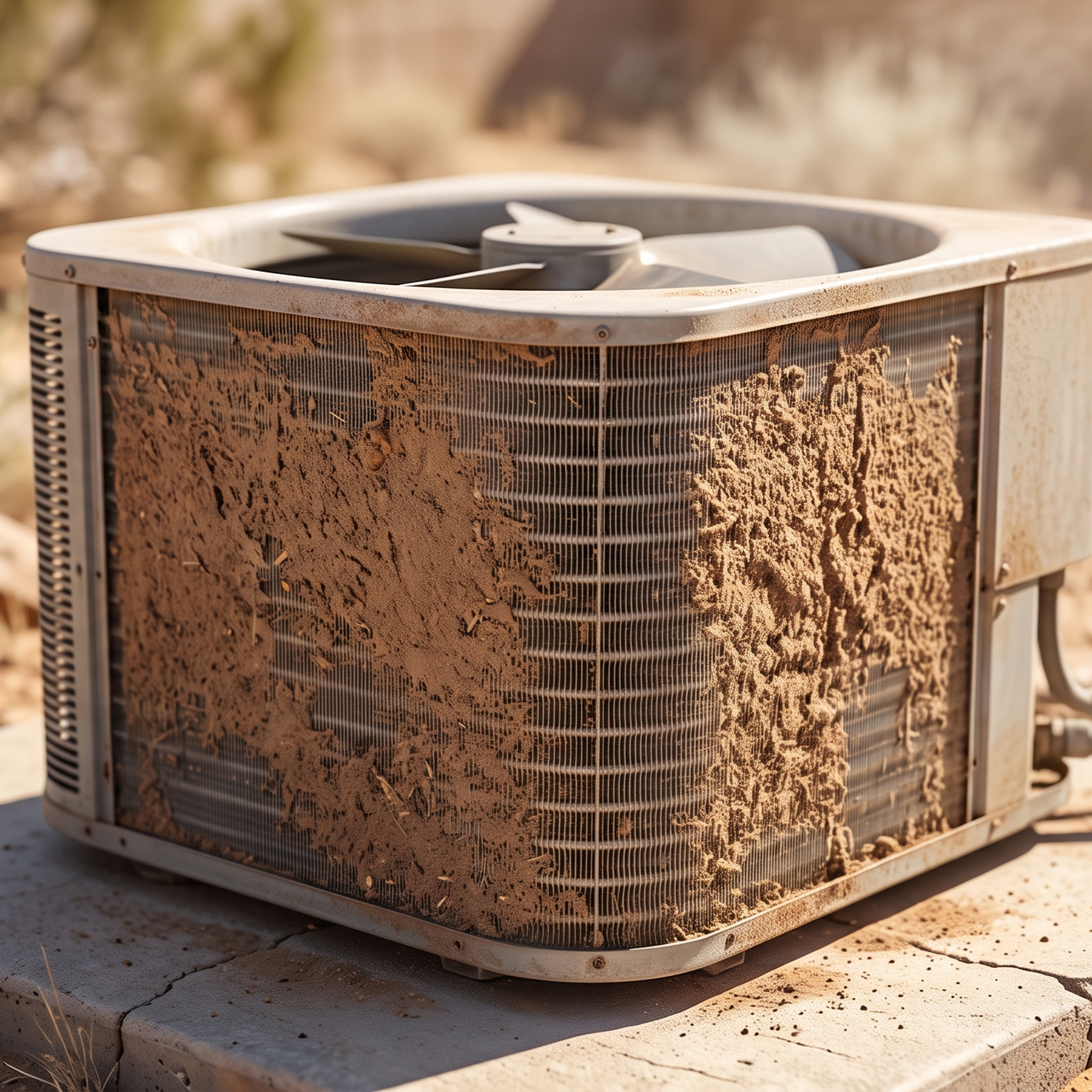
The outdoor unit's condenser coils release the heat pulled from inside. When they're caked with dust, dirt, and debris — common in a dusty, windy climate — they can't shed heat efficiently, so the system runs but can't cool well. Clearing debris and keeping the outdoor unit clean helps the system release heat.
Low Refrigerant
Refrigerant is what actually carries heat out of your home, so if the system is low — usually from a leak — it can't remove heat effectively, and the AC runs without cooling. Low refrigerant is a common cause of warm air from a running unit, and because it indicates a leak in a sealed system, it requires a professional.
A Frozen Evaporator Coil
Ironically, an AC can stop cooling because part of it froze. Restricted airflow or low refrigerant can cause the indoor evaporator coil to ice over, which blocks cooling entirely. If you find ice on the unit, that's a sign — and it can point to airflow or refrigerant problems.
A Failing Capacitor or Compressor
The compressor is the heart of the cooling cycle, and the capacitor helps its motor run. If the compressor is failing or the capacitor is weak — and desert heat is hard on capacitors — the cooling cycle falters even while the fan keeps running. These are electrical and mechanical faults that need a technician.
Thermostat Issues
Sometimes the problem is the thermostat misreading the temperature or not signaling the system correctly, so the AC runs without cooling as it should. It's worth confirming the thermostat settings before assuming a bigger fault.
| What you find | Likely cause | What to do |
|---|---|---|
| Weak cooling, dirty filter | Clogged air filter | Replace the filter |
| Outdoor unit dirty/blocked | Dirty condenser coils | Clear and clean the unit |
| Warm air, possible hissing | Low refrigerant (leak) | Call an HVAC pro |
| Ice on the unit | Frozen evaporator coil | Airflow/refrigerant issue — pro |
| Fan runs, no cool, clicking | Failing capacitor/compressor | Professional diagnosis |
In extreme desert heat, a home that won't cool can become a health risk, especially for older adults, children, and pets. If your AC isn't cooling during a heat wave and the simple checks don't fix it, treat it as urgent and get professional help promptly rather than waiting it out.
What to Check and When to Call
The safe homeowner steps are worth doing first, because they resolve a real share of cases: replace the air filter, clear dust and debris from around and off the outdoor condenser unit, make sure nothing is blocking airflow, and confirm the thermostat is set correctly. In dusty conditions, a clogged filter or dirty coils alone often explain a system that runs without cooling.
Beyond that, the causes involve refrigerant, sealed systems, capacitors, and compressors — all of which need professional tools, training, and sometimes refrigerant handling. If a clean filter and clear coils don't restore cooling, or you find ice on the unit or hear the compressor struggling, it's time for an HVAC technician. Given how fast a desert home heats up, getting a non-cooling AC diagnosed quickly matters more here than in a mild climate.
Frequently Asked Questions
Because the system is moving air but not removing heat. The fan and blower are working, but something in the cooling process has failed — commonly a dirty filter or dirty condenser coils restricting airflow and heat release, low refrigerant from a leak, a frozen evaporator coil, or a failing capacitor or compressor. A thermostat issue can also be the culprit. Start by checking the filter and the outdoor unit; if cooling doesn't return, the cause is likely refrigerant or electrical and needs a pro.
Because extreme heat pushes the system to work at its maximum, so anything hampering it shows up immediately. On a very hot day, the AC runs longer and harder to keep up, and a dirty filter, dirty coils, low refrigerant, or a weak capacitor that might go unnoticed in mild weather becomes obvious when the house won't cool. Desert dust also clogs filters and coils faster. So the heat both stresses the system and exposes any problem holding back its cooling.
It can significantly reduce cooling. The filter has to allow good airflow for the system to cool properly; when it's clogged, air can't move freely across the coils, cooling drops off, and the system struggles or can even freeze up. In dusty New Mexico, filters clog faster than expected, making this a common, easy-to-fix cause of poor cooling. Checking and replacing the filter is always the first thing to try when an AC runs but doesn't cool.
Ice on the unit — typically the indoor evaporator coil — usually results from restricted airflow or low refrigerant. When airflow is blocked (often by a dirty filter) or refrigerant is low, the coil can get cold enough to freeze, and once it ices over, cooling stops entirely. The ice is a symptom pointing back to an airflow or refrigerant problem. Turning the system off to let it thaw, addressing the underlying cause, and calling a pro for refrigerant issues is the path forward.
No. Refrigerant runs in a sealed system, and being low almost always means there's a leak, which needs to be found and repaired by a trained HVAC technician with the right tools, before the system is properly recharged. Handling refrigerant requires expertise and certification. So while you can check the filter and clean the outdoor unit yourself, low refrigerant and the leak behind it are firmly professional work, and an important fix since refrigerant is what carries heat out of your home.
AC running but not cooling in the heat? — Get it diagnosed and repaired fast by experienced local HVAC technicians. Hi-Tech Heating and Cooling serves Albuquerque, Rio Rancho, Corrales. Call (505) 398-4398.
